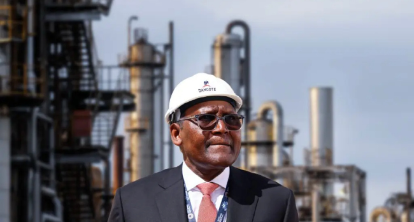
In a surprising turn of events, the Dangote Group announced its decision to withdraw a ₦100bn lawsuit filed against the Nigerian Midstream and Downstream Petroleum Regulatory Authority (NMDPRA). The suit had challenged the agency’s issuance of import licenses to the Nigerian National Petroleum Company Limited (NNPCL) and several other companies, including Matrix Petroleum Services Limited and AA Rano Limited, despite sufficient local production of petroleum products.
The lawsuit, filed at the Federal High Court in Abuja on September 6, 2024, claimed that the NMDPRA violated sections 317(8) and (9) of the Petroleum Industry Act (PIA) by issuing import licenses when there was no proven shortfall in local production. Dangote Refinery argued that these import licenses were detrimental to its operations, as the company has heavily invested billions of dollars into local refining and was seeking protection from undue competition.
However, in a statement released late Monday, Dangote Group’s spokesman, Anthony Chiejina, revealed that the parties involved had initiated conciliatory talks, rendering the lawsuit unnecessary. “We have agreed to put a halt to the proceedings. It is important to stress that no orders have been made, and there are no adverse effects on any party,” Chiejina said, adding that the formal withdrawal is expected to take place when the case is revisited in January 2025.
The lawsuit had initially sought an injunction to prevent the NMDPRA from issuing or renewing import licenses for the defendants. The presiding judge, Justice Inyang Ekwo, had adjourned the case to January 20, 2025.
Dangote Refinery, which began operations at its $20bn facility in Lagos last December, has started supplying diesel, aviation fuel, and petrol to Nigerian markets. The refinery, capable of processing 350,000 barrels per day, aims to reach its full capacity of 650,000 barrels per day by year-end.
The decision to withdraw the lawsuit follows a delicate period for Nigeria’s energy sector. The country is heavily dependent on imported refined petroleum products, as its state-owned refineries remain non-operational. With fuel prices tripling since the removal of subsidies in May 2023, Nigeria continues to face energy challenges, and the NNPCL remains the major importer of petroleum products.
