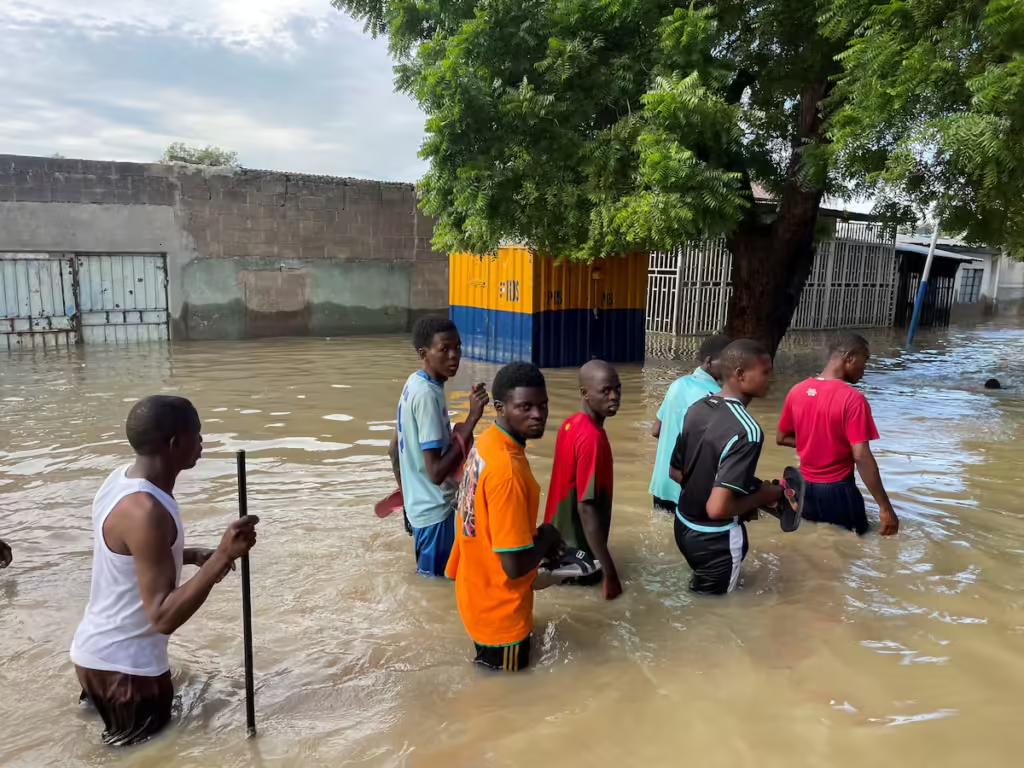
A team of international scientists has revealed that devastating rains leading to deadly floods in Cameroon, Chad, Niger, Nigeria, and Sudan in recent months were significantly worsened by human-caused climate change. According to the World Weather Attribution (WWA) group, global warming intensified this year’s seasonal downpours by about 5-20% across the Niger and Lake Chad basins.
These heavy rains have already resulted in catastrophic outcomes, with around 1,500 people dead and over 1 million displaced across West and Central Africa, according to the United Nations Office for the Coordination of Humanitarian Affairs (OCHA). The rainfall also led to the overwhelming of dams in Nigeria and Sudan.
Izidine Pinto, a researcher at the Royal Netherlands Meteorological Institute, noted that “spells of heavy summer rainfall have become the new normal” in the affected countries. The WWA warned that if global temperatures rise by 2 degrees Celsius, as could happen by the 2050s, extreme downpours of this magnitude could occur nearly every year.
The WWA called for urgent action, including investment in early warning systems and upgrades to critical infrastructure, such as dams, to mitigate future disasters.
Joyce Kimutai, a researcher at the Centre for Environmental Policy at Imperial College in London, highlighted Africa’s disproportionate burden in facing the consequences of climate change, despite contributing minimally to global carbon emissions. She urged for more “meaningful finance” from wealthy nations during the upcoming COP29 climate talks in November to support Africa’s adaptation and resilience efforts.
