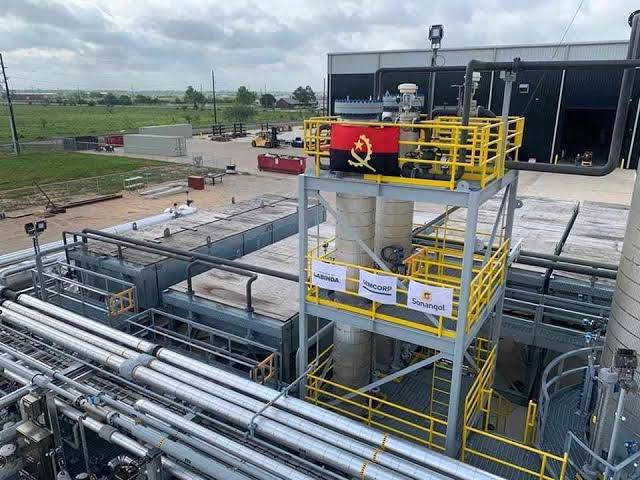
Angola’s Cabinda oil refinery is set to start production by April, a crucial milestone for the country’s energy independence as it completes the first phase ahead of schedule, although with budget overruns. Gemcorp Holdings Limited, the largest shareholder in the project, disclosed this update at the Financial Times Africa Summit in London.
The refinery will be commissioned in January-February, with the first supply of refined fuels reaching Angola’s domestic market by March-April, according to Atanas Bostandjiev, founder and CEO of Gemcorp. This project represents Angola’s second oil refinery, poised to reduce reliance on costly fuel imports as the country moves to phase out fuel subsidies. Gemcorp holds a 90% stake in the refinery, with Angola’s state-controlled oil firm Sonangol owning the remaining 10%.
Phase one of the greenfield refinery, initially estimated at $473 million, saw its budget swell to around $500 million-$550 million due to inflation and pandemic-related costs. However, it is now set to refine Angolan Cabinda crude at a rate of 30,000 barrels per day (bpd), providing around 5-10% of Angola’s fuel needs. The initial target completion was slated for July 2025 but was achieved ahead of schedule.
This development is significant for Angola, sub-Saharan Africa’s second-largest oil producer, which exports 98% of its crude while importing nearly all its refined fuel, mostly from Europe. “Angola’s reliance on imported fuel is unsustainable,” Bostandjiev noted. The refinery’s first phase will initially produce diesel and jet fuel for local consumption, exporting naphtha and fuel oil not yet processed locally. China remains Angola’s largest buyer of crude, taking in nearly 60% of exports in 2023.
The second phase, expected to launch within 1-2 years of the refinery’s startup, will increase processing capacity to 60,000 bpd and introduce a hydrocracking unit to produce more diesel and jet fuel. Funding for this phase remains under discussion, with a final decision expected by mid-2024.
The Cabinda project’s progress underscores Gemcorp’s status as the refinery’s only Western investor, a reality Bostandjiev attributes to environmental, social, and governance (ESG) standards that restrict many Western firms from oil and gas ventures. The refinery may later explore fuel exports to neighboring countries, including the Democratic Republic of the Congo.
