On Monday, Saudi Arabia’s de facto ruler, Crown Prince Mohammed bin Salman, called on Israel to respect Iran’s sovereignty and avoid launching attacks on Iranian territory. This statement underscores the growing diplomatic warming between the Middle East’s regional rivals.
Addressing a summit of Arab and Muslim leaders, the Crown Prince urged the international community to press Israel to “respect the sovereignty of the sisterly Islamic Republic of Iran and not to violate its lands.”
Saudi Arabia, a Sunni-majority nation, and Iran, a Shiite-majority power, have historically been on opposite sides in regional conflicts, such as in Syria. Saudi Arabia led a coalition in 2015 to support Yemen’s internationally recognized government after Huthi rebels, backed by Iran, seized Yemen’s capital, Sanaa. Tensions escalated when Saudi diplomatic missions in Iran were attacked during protests over the execution of Shiite cleric Nimr al-Nimr in 2016, severing diplomatic ties.
However, in March 2023, Saudi Arabia and Iran announced a diplomatic rapprochement brokered by China, marking a key shift in relations. While issues between the two countries remain, the thawing ties represent a significant achievement for Crown Prince Mohammed, who has taken a more conciliatory approach to regional diplomacy in recent years.
As part of their reconciliation efforts, Saudi Arabia and Iran have maintained communication, particularly regarding the ongoing conflict in Gaza. Prince Mohammed and Iranian officials, including President Ebrahim Raisi, have engaged in direct talks. Notably, in October, Saudi Arabia held joint military exercises with Iran and other countries in the Sea of Oman.
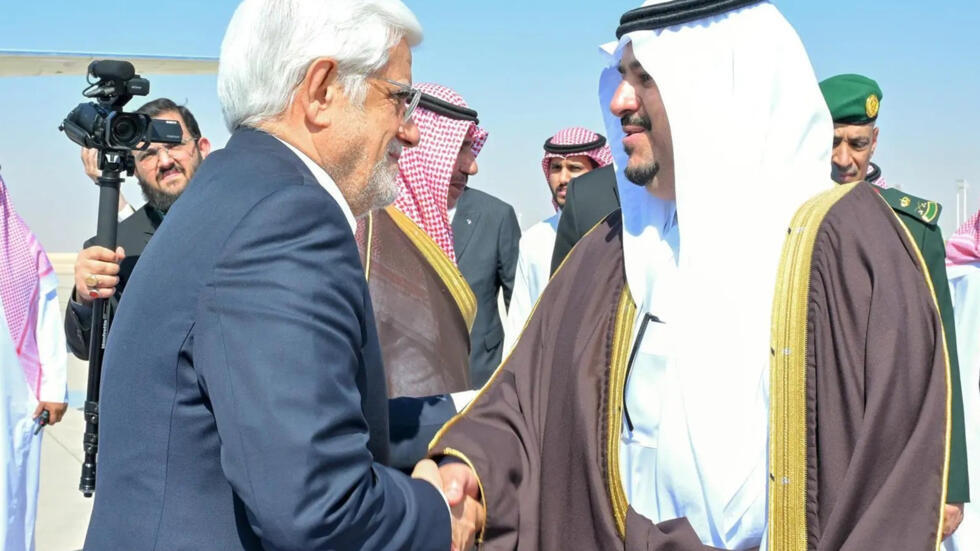
Amid growing concerns over the Gaza war and escalating violence between Israel and Hezbollah, Saudi Arabia has continued its diplomatic outreach with Iran. Fayyad al-Ruwaili, Saudi Arabia’s top military official, arrived in Tehran for talks on Sunday, and a phone call took place between Crown Prince Mohammed and Iran’s current president, Masoud Pezeshkian, ahead of the summit.
The restored ties between Riyadh and Tehran are reshaping the regional diplomatic landscape, particularly as Saudi Arabia explores the possibility of a larger peace deal with Israel. Before the Gaza conflict erupted, Saudi Arabia had been in discussions about recognizing Israel in exchange for stronger security cooperation with the U.S. and deeper bilateral ties. This would have built on the Abraham Accords, a framework of normalization agreements brokered under President Donald Trump’s administration.
The evolving relationship between Saudi Arabia and Iran could pose challenges for future diplomatic initiatives in the region. As H.A. Hellyer, a Middle East expert at the Royal United Services Institute, pointed out, these developments will create a more complex environment for any potential efforts to expand the Abraham Accords, especially if Israel’s regional approach remains unchanged.
