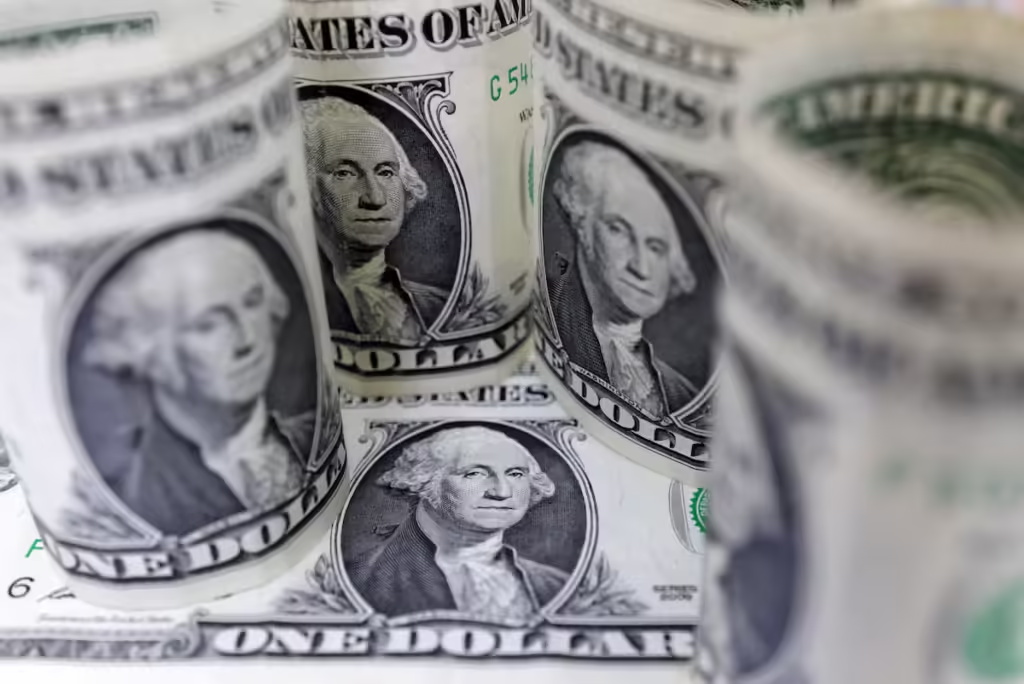
The U.S. dollar surged close to a four-month peak against major currencies on Tuesday, while Bitcoin extended a record-breaking rally amid investor enthusiasm for policies expected from President-elect Donald Trump’s administration. Trump has pledged to drive U.S. economic growth and make the country “the crypto capital of the planet,” fueling strong interest in U.S.-based assets and cryptocurrencies.
The U.S. dollar index, which tracks the greenback against six major currencies, was up 0.07% at 105.49 by 0037 GMT, after reaching a high of 105.70 on Monday, its strongest level since July 3. The euro, meanwhile, languished near a seven-month low of $1.0629 reached overnight as European markets brace for potential U.S. tariffs under Trump’s trade policies. The Chinese yuan also dipped to a three-month low at 7.2337 per dollar, with China’s export policies in Trump’s crosshairs.
Bitcoin continued its explosive rise, setting a new all-time high of $89,637 on Tuesday. Analysts predict the cryptocurrency could hit $100,000 by the end of the year. “If history is any guide, Bitcoin could easily finish the year around $100,000,” said Kyle Rodda, senior financial markets analyst at Capital.com. He attributed the surge to expectations of favorable U.S. policies toward digital currencies.
Investors are positioning themselves for what they anticipate will be a pro-growth agenda under Trump, which may include tax cuts, reduced federal spending, and aggressive trade practices. With both houses of Congress projected to fall under Republican control, Trump is expected to press forward with his economic reforms, including tariffs and other measures aimed at reducing imports from China and Europe. Trump has warned that the eurozone “will pay a big price” for insufficient purchases of American exports, with automotive imports being a key target. He has also threatened China with a sweeping 60% tariff on goods.
As a result, market expectations for a Federal Reserve interest rate cut in December are now less certain, with the probability of a quarter-point cut on Dec. 18 reduced to about 65% from nearly 80% last week, according to CME Group’s FedWatch Tool.
The euro last traded at $1.0658, having dipped to its weakest level since April. The offshore yuan traded at 7.2241 per dollar after hitting lows on Monday. Market watchers expect continued volatility as Trump’s policies take shape and impact global trade and currency dynamics.
