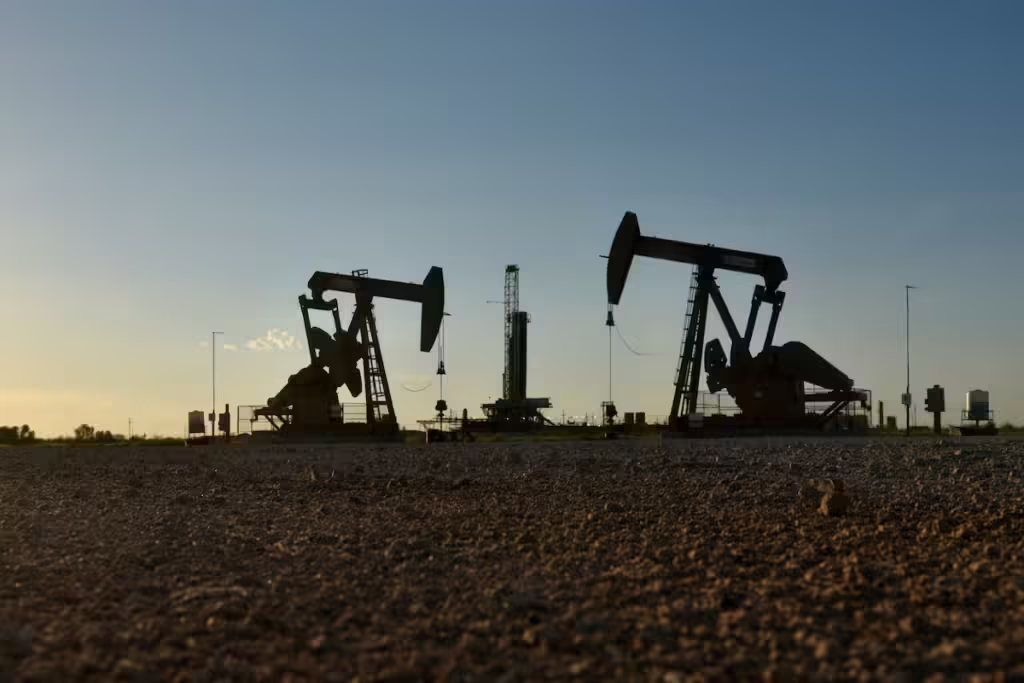
Oil prices dipped in early trading on Thursday, reversing much of the previous session’s gains, as concerns over higher global production and sluggish demand growth weighed on the market. A stronger U.S. dollar further contributed to the declines.
Brent crude futures dropped 35 cents, or 0.5%, settling at $71.93 a barrel by 0400 GMT, while U.S. West Texas Intermediate (WTI) crude futures fell by 42 cents, or 0.6%, to $68.01.
The drop in oil prices follows concerns raised by the Organization of the Petroleum Exporting Countries (OPEC), which recently lowered its global oil demand growth forecast for 2024. OPEC now expects global demand to increase by 1.82 million barrels per day (bpd) next year, down from its previous forecast of 1.93 million bpd, primarily due to weak demand in key markets such as China and India.
“Oil is tackling the weaker demand forecast narrative by OPEC, who deferred rolling back additional production for yet another month, fearing the adverse effect on prices,” said Priyanka Sachdeva, senior market analyst at Phillip Nova.
On top of OPEC’s forecast revisions, the U.S. Energy Information Administration (EIA) slightly raised its estimate for U.S. oil production, now projecting an average output of 13.23 million bpd for this year—300,000 bpd higher than last year’s record levels. The EIA also increased its global oil output forecast for 2024 to 102.6 million bpd, further contributing to worries of oversupply in the market.
Meanwhile, analysts are keeping an eye on demand trends in China, a major oil importer. Despite stimulus measures from the Chinese government, economic activity and sentiment in mainland China have shown little improvement, according to Sachdeva. “China continues to be the ‘sore joint’ for oil demand, and is the primary reason why oil markets are bracing for an oversupply in 2025,” she said.
Further pressure on oil prices comes from the rising U.S. dollar, which reached a near seven-month high against major currencies on Wednesday. This is in the wake of U.S. inflation data for October, which came in as expected, fueling expectations that the Federal Reserve may continue to cut interest rates. A stronger dollar makes oil, priced in greenbacks, more expensive for buyers using other currencies, thus dampening demand.
Market participants are awaiting the International Energy Agency’s (IEA) oil market report, due later in the day, as well as the EIA’s U.S. crude oil and product stockpile data, which could offer further insights into market dynamics.
Despite these concerns, the outlook remains uncertain, with analysts closely watching how the combination of global supply increases and muted demand growth will shape future oil prices.
