The latest Nigeria Labour Force Survey (NLFS) for the second quarter of 2024 reveals significant insights into the nation’s labour market, shedding light on employment trends, labour force participation, and challenges such as unemployment and underemployment.
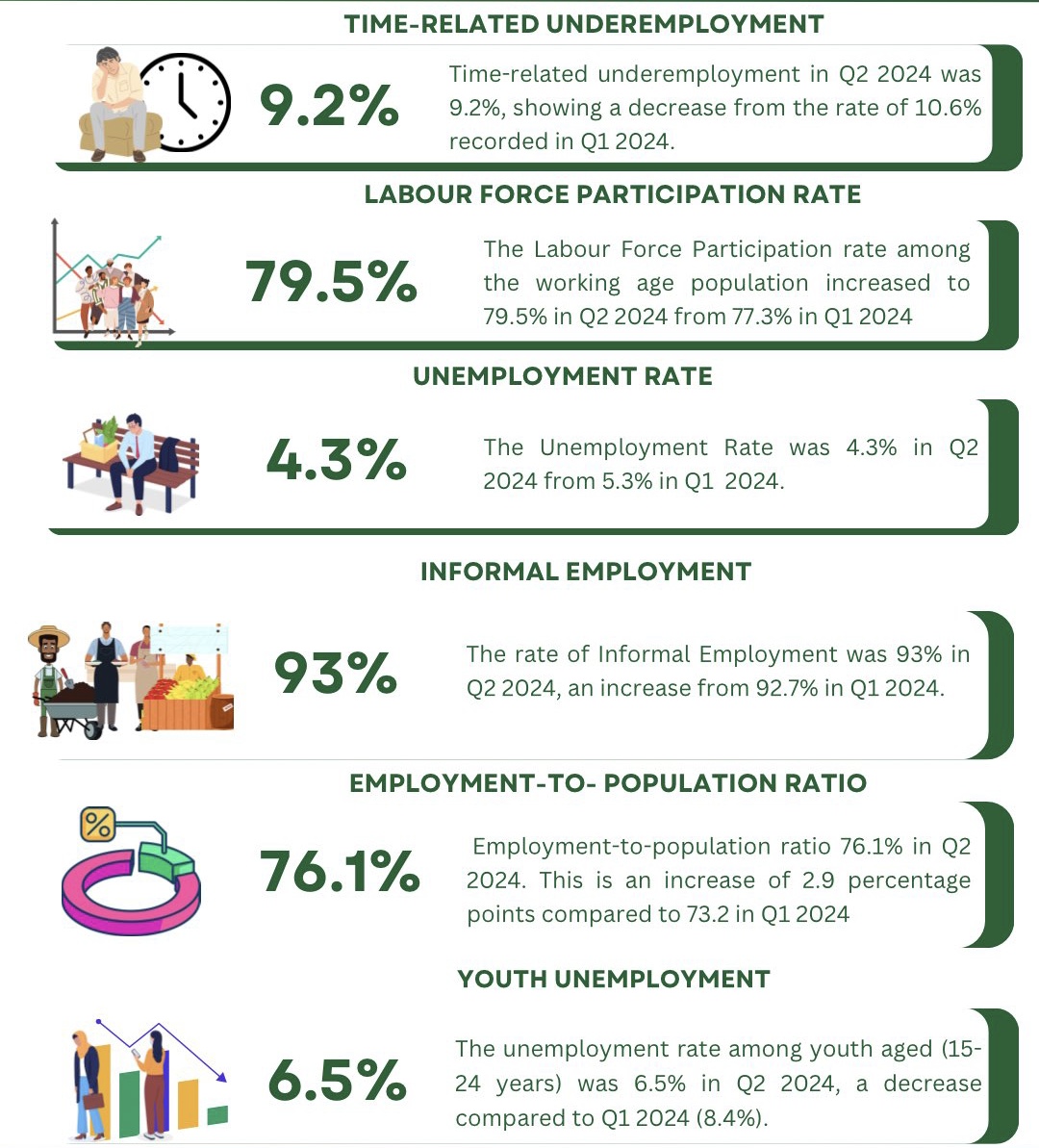
Labour Force Participation at 79.5%
The survey shows an increase in the labour force participation rate, rising to 79.5% in Q2 2024 from 77.3% in Q1. This reflects sustained engagement of the working-age population in economic activities. Rural areas outpaced urban regions, with participation rates of 83.2% and 77.2%, respectively.
Employment-to-Population Ratio Climbs
The employment-to-population ratio saw a significant jump, reaching 76.1%, up from 73.2% in the previous quarter. Rural residents and males had the highest employment rates, with rural areas recording 80.8% compared to 73.2% in urban areas.
Unemployment Rate Declines
The unemployment rate dropped slightly to 4.3% from 5.3% in Q1 2024. However, disparities persist:
• Urban areas recorded an unemployment rate of 5.2%, compared to 2.8% in rural areas.
• Youth unemployment (ages 15-24) decreased to 6.5% from 8.4% in Q1.
Challenges Persist with Informal Employment
Informal employment remains dominant, accounting for 93% of total employment in Q2 2024. Education level plays a pivotal role, as individuals with higher education levels are less likely to be engaged in informal jobs.
Time-Related Underemployment Drops
Time-related underemployment, representing individuals working fewer than 40 hours weekly but willing to work more, fell to 9.2%, a reduction from 10.6% in Q1 2024.
Youth NEET Rate Shows Improvement
The percentage of youths aged 15-24 classified as NEET (Not in Education, Employment, or Training) declined to 12.5%, down from 14.4% in Q1. However, a gender gap remains, with 14.3% of females in NEET compared to 10.9% of males.
Discouraged Job Seekers on the Decline
The report highlights a significant drop in the share of discouraged job seekers, from 3.6% in Q1 to 2.0% in Q2, suggesting improved labour market conditions and participation.
Path Ahead
The findings emphasize the need for targeted policies to address labour market disparities, particularly urban-rural and gender differences. Efforts to formalize employment and improve inclusivity for persons with disabilities are also highlighted as key areas for development.
For more information, the full NLFS Q2 2024 report is available through the National Bureau of Statistics (NBS).
Would you like this tailored further for a specific audience or medium?
