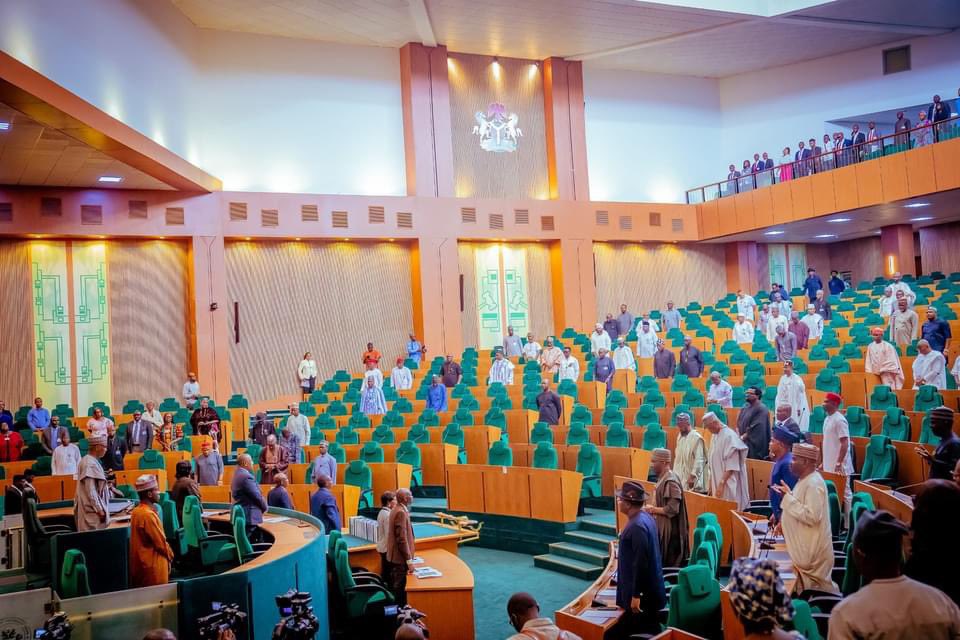
The House of Representatives has approved the 2025-2027 Medium Term Expenditure Framework and Fiscal Strategy Paper (MTEF/FSP) submitted by President Bola Ahmed Tinubu, paving the way for the presentation of the 2025 federal budget.
The approval, however, includes recommendations for extensive investigations into allegations of financial irregularities involving the Nigerian National Petroleum Company (NNPC) Limited. The Revenue Mobilization, Allocation, and Fiscal Commission claimed the NNPC withheld ₦8.48 trillion from the Federation Account as subsidy claims, while the Nigerian Extractive Industries Transparency Initiative (NEITI) reported unremitted taxes amounting to $2 billion (₦3.6 trillion) and under-recovered revenues from Premium Motor Spirit (PMS) sales between 2020 and 2023.
Key Economic Projections
The MTEF/FSP outlines critical parameters for the 2025 budget, including:
• Exchange rate: ₦1,400 to $1 (subject to review in 2025).
• Oil production: 2.06 million barrels per day at $75 per barrel.
• Inflation rate: 15.75%.
• GDP growth rate: 4.6%.
While approving these figures, Minority Leader Kingsley Chinda and other lawmakers raised concerns about the inflation projection’s feasibility and recommended adjusting crude oil production and pricing targets.
2025 Budget Highlights
The House approved a proposed ₦47.9 trillion federal budget for 2025, including:
• ₦34.82 trillion retained revenue.
• ₦9.22 trillion in new borrowings (domestic and foreign).
• ₦15.38 trillion allocated for debt service.
• ₦16.48 trillion for capital expenditure.
• Fiscal deficit: ₦13.08 trillion.
Mandated Investigations
The House directed multiple investigations to enhance revenue transparency and accountability, including:
1. A review of the Nigerian Export Supervision Scheme (NESS) Act to ensure effective monitoring of oil and gas exports by the Ministry of Finance and the Central Bank of Nigeria (CBN).
2. An inquiry into the Import Duty Exemption Certificate (IDEC) program to address potential revenue losses from waivers.
3. Comprehensive scrutiny of agreements by the NNPC, NLNG, and Immigration Services concerning remittances to the Federation Account.
Strengthening Fiscal Compliance
The House recommended quarterly hearings with revenue-generating agencies to enforce compliance with the Fiscal Responsibility Act, establish performance metrics for MDAs, and mandate regular independent audits to improve financial reporting standards.
Addressing Nigeria’s Debt Profile
The Committee on Finance emphasized that mounting liabilities and debt obligations are significantly driven by revenue-generation gaps, urging punitive measures for agencies violating fiscal regulations.
The House’s actions reflect its commitment to fiscal responsibility, transparency, and optimizing Nigeria’s economic framework as preparations for the 2025 budget take shape.
