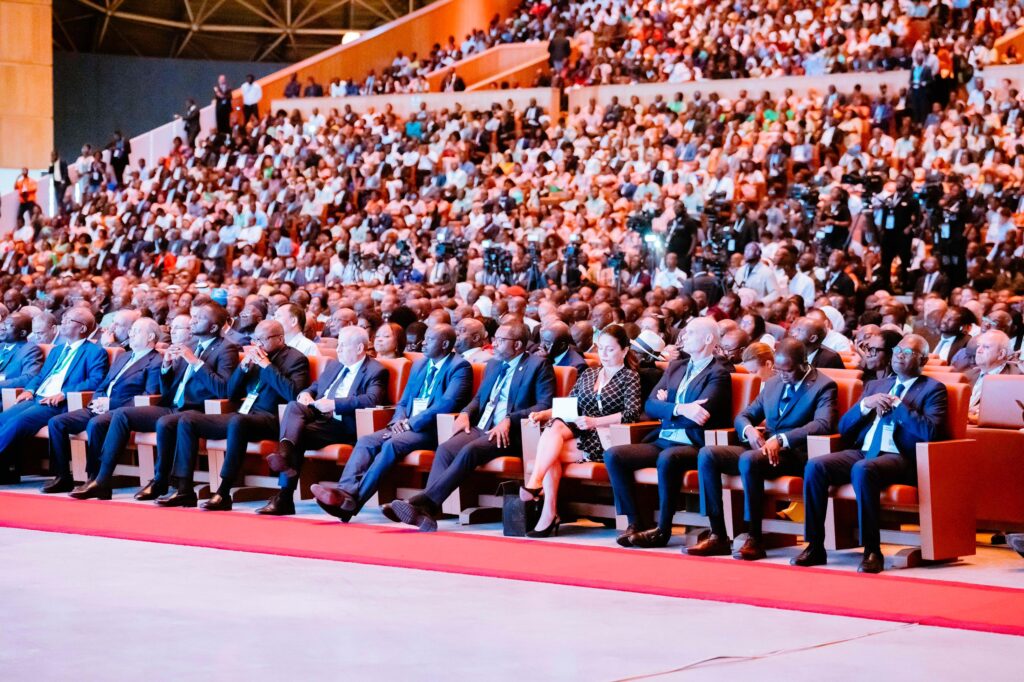
Nigeria has called for stronger governance, transparency, and regional collaboration to harness Africa’s vast resource wealth for sustainable development. Vice President Kashim Shettima outlined the nation’s position during the inaugural International Exhibition of Extractive and Energy Resources (SIREXE), held in Abidjan, Côte d’Ivoire, on Wednesday.
Speaking at the summit, themed “Policies and Strategies for the Sustainable Development of the Extractive and Energy Industries,” Vice President Shettima emphasized that effective institutions are the key to transforming natural resources into national prosperity.
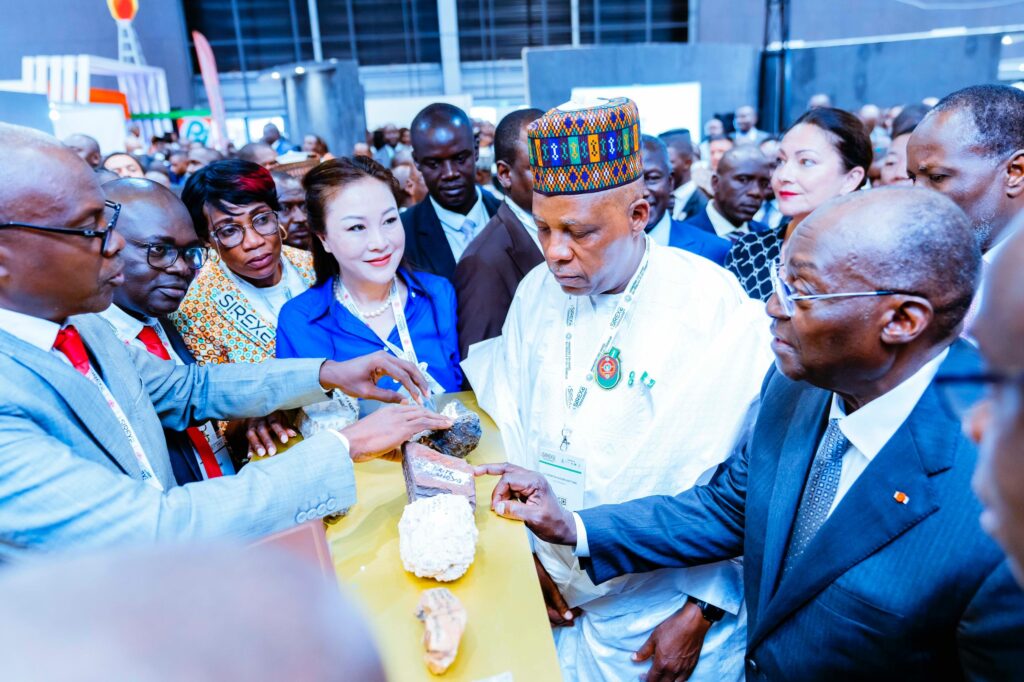
“This is not just about resources; it’s about people, prosperity, and posterity,” Shettima declared. “The strength of our governance institutions will determine whether resource wealth becomes a blessing or a curse. With the right policies, transparency, and accountability, we can ensure that our mineral wealth fuels development rather than division.”
The Vice President highlighted Nigeria’s leadership in promoting transparency, citing the establishment of the Nigeria Extractive Industries Transparency Initiative (NEITI) in 2004.
“We became the first country in the world to domesticate the Extractive Industries Transparency Initiative because we understood that opacity breeds inefficiency and corruption. Transparency is non-negotiable for building trust and ensuring inclusive benefits for all,” he stated.
Shettima also pointed to the restructuring of the Nigerian National Petroleum Corporation (NNPC) under the 2021 Petroleum Industry Act (PIA), which transformed the NNPC into a commercially-oriented entity. “NNPC Limited now operates with agility, transparency, and reduced government interference. This shift is setting a new standard for resource governance in Africa,” he said.
The Vice President underscored the importance of local content development in driving economic growth. He cited Nigeria’s Local Content Act of 2010, which increased local participation in the oil and gas industry from 5% to nearly 30%. He also highlighted the success of the Dangote Refinery, calling it a testament to the potential of indigenous innovation and capacity.
Addressing the need for regional unity, Shettima noted, “Africa’s energy future is intertwined. The progress of one state ripples across others. Nigeria stands ready to share its lessons and collaborate with ECOWAS partners to build an extractive industry that works for our people.”
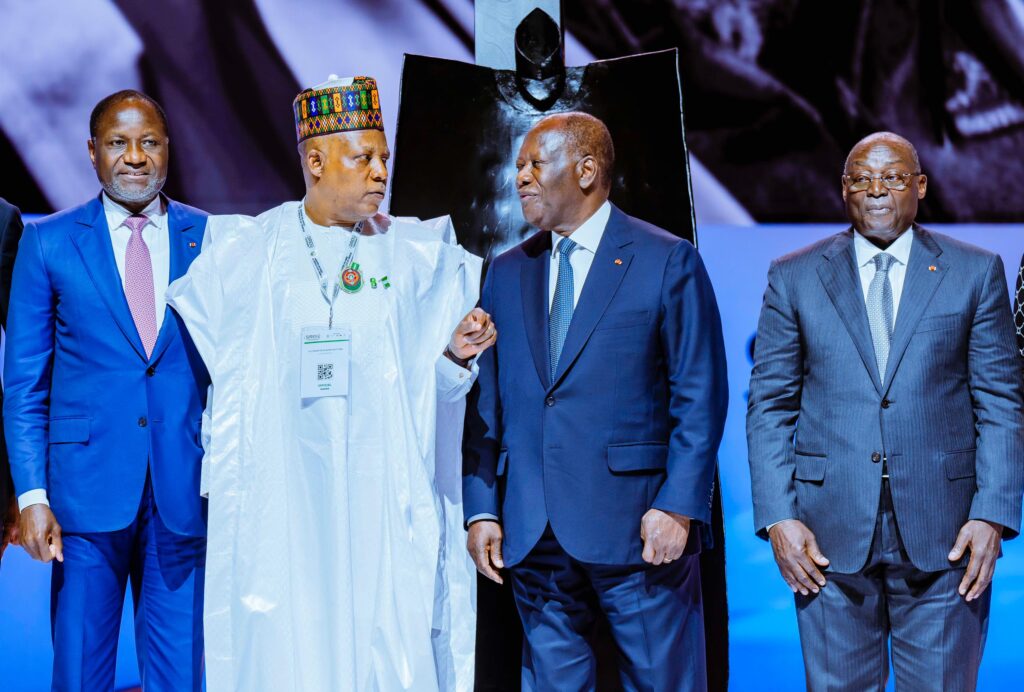
The summit brought together leaders from across Africa to discuss resource management and energy security. Côte d’Ivoire’s Vice President Tremoko Meyliet Kone welcomed the gathering, emphasizing the need for collaboration to maximize natural resources while addressing challenges like climate degradation and pollution.
In her remarks, Norway’s Ambassador to Côte d’Ivoire, Ingrid Mollestad, praised the conference as a testament to Africa’s ambition and commitment to sustainable development in the extractive sector.
Côte d’Ivoire’s Minister of Mines, Petroleum, and Energy, Mamadou Sangafowa Coulibaly, also stressed the importance of partnerships in addressing global energy needs and economic development.
Vice President Shettima concluded with a rallying call for unity and action. “Our continent is home to 40% of the world’s gold, 10% of its oil, and critical minerals like cobalt and lithium. Yet, our potential remains untapped. Let us rise to this moment, not as isolated nations but as a unified region,” he urged.
As the summit closed its first day, leaders and stakeholders reaffirmed their commitment to building an inclusive, transparent, and prosperous extractive industry for Africa’s future generations.
