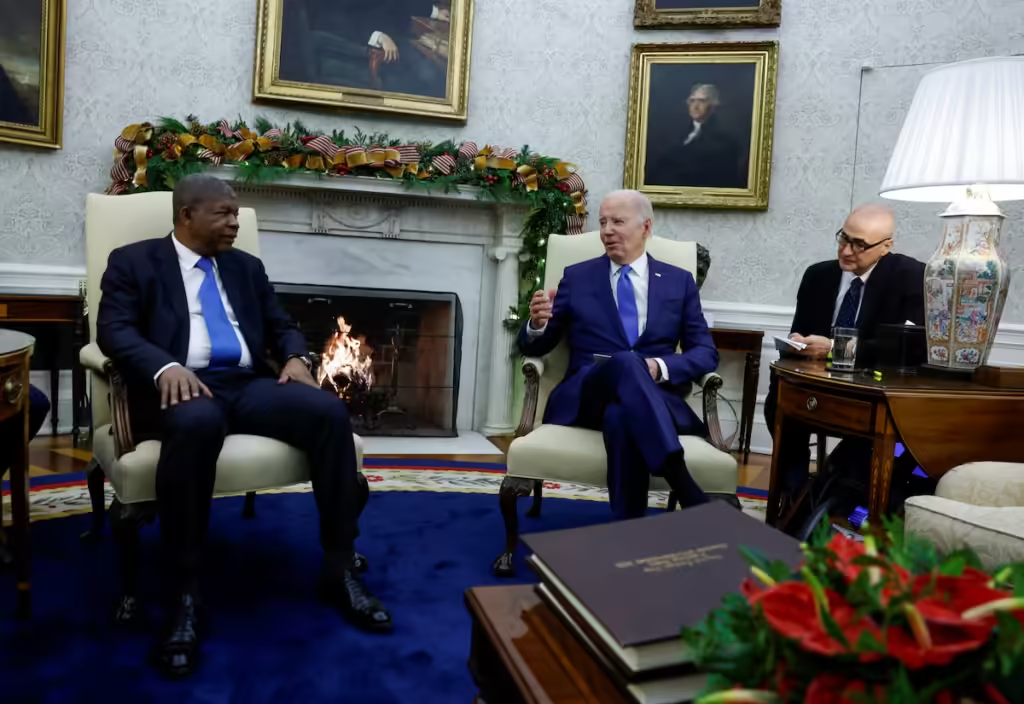
U.S. President Joe Biden arrived in Angola on Sunday as part of a high-stakes trip focused on strengthening ties with Africa and advancing the U.S.-backed Lobito Atlantic Railway project. The initiative aims to reshape critical mineral supply chains by providing an efficient export route from the Democratic Republic of Congo (DRC) and Zambia to global markets via Angola’s Lobito port.
The $550 million railway refurbishment, funded in part by a loan from the U.S. Development Finance Corporation, is a key move in Washington’s strategy to reduce reliance on China, which dominates the mineral-rich DRC. The 1,300-kilometer railway is designed to facilitate the transport of vital resources like copper and cobalt, essential components in batteries and electronics.
“Competition with China and securing access to critical minerals are the twin pillars of U.S. strategy in Africa,” said Tibor Nagy, a retired ambassador and former top Africa envoy. The Lobito Railway “checks both boxes,” he added.
Biden’s visit underscores Angola’s growing strategic importance. Historically aligned with China and Russia, Angola has recently sought closer ties with the West to boost its economic development. Angolan Transport Minister Ricardo Viegas d’Abreu emphasized the nation’s openness to partnerships that drive growth. “China has only gained prominence because Western countries have not paid enough attention to Africa,” he stated.
Biden’s trip also seeks to repair a fraught history between the U.S. and Angola, which were on opposing sides during the country’s 27-year civil war. “It’s probably poetic justice that the United States is now financing the rehabilitation of this route after contributing to its destruction decades ago,” noted Akashambatwa Mbikusita-Lewanika, a former Zambian official who managed part of the railway.
The Lobito Railway project is supported by international firms, including global commodities trader Trafigura, Portuguese construction group Mota-Engil, and Belgian railway operator Vecturis. Biden administration officials view the railway as a prototype for future private-public infrastructure partnerships in Africa.
During his two-day visit, Biden will meet Angolan leaders, tour the National Museum of Slavery in Luanda, and visit Lobito port, where he is expected to highlight the railway’s progress. His itinerary also included a brief stop in Cape Verde on Monday to meet with Prime Minister Ulisses Correia e Silva.
While the Lobito Railway project is central to Biden’s trip, it faces scrutiny over its timelines and broader implications. A proposed second phase, which would extend the railway to Tanzania on Africa’s eastern coast, has raised questions about whether it could ultimately benefit China by offering alternative trade routes.
Former Biden Africa adviser Judd Devermont dismissed such concerns, noting that Congo seeks to diversify its mining partnerships. “The Congolese have been very clear that they don’t want their entire mining sector dominated by China,” he said.
Biden’s visit comes as Washington works to regain its footing in Africa following setbacks, including the loss of its major spy base in Niger earlier this year. The trip highlights the administration’s focus on infrastructure and mineral security as it seeks to deepen ties with African nations and counter Beijing’s growing influence on the continent.
