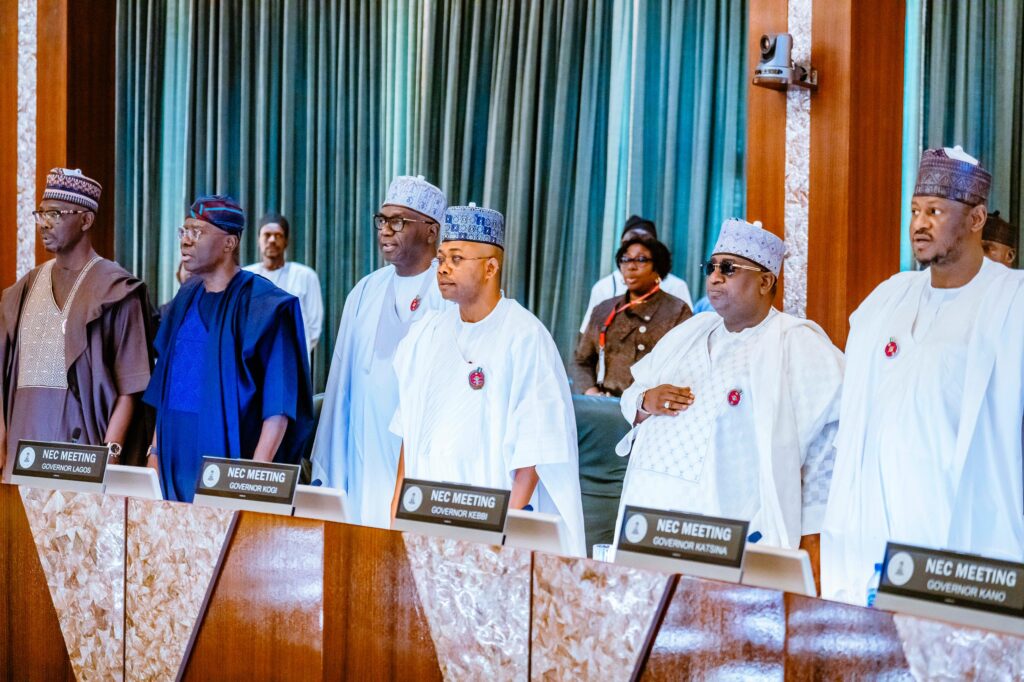
Vice President Senator Kashim Shettima has reiterated the need for Nigeria to resolve its power sector challenges to achieve meaningful economic development. He made this statement on Thursday at the Presidential Villa, Abuja, during the inauguration of two National Economic Council (NEC) ad hoc committees—one on National Electrification and another on Polio Eradication.
In his remarks, VP Shettima emphasized that electricity access and energy sufficiency are prerequisites for industrialization, citing nations like Indonesia, India, and South Africa as examples. “There is no doubt that we cannot dream of meaningful national economic development without addressing the issue in the power sector and ensuring that Nigerians have accessible, available, and affordable energy,” he stated.
The Vice President expressed concern over the estimated 40-70% of Nigerians lacking formal electricity access. He also highlighted the persistent national grid collapses as a key challenge but was optimistic about recent energy sector reforms, which he believes will attract investments and enhance energy security.
Shettima called on members of the National Electrification ad hoc committee to work diligently, stating, “With this, I hereby inaugurate the NEC ad hoc committee on National Electrification Strategy and Implementation Plan.”
The committee, chaired by Cross River State Governor Prince Bassey Edet Otu, was tasked with resolving grid failures, deepening state engagement in the Electricity Reform Act 2023, and formulating a sustainable National Electrification Strategy.
In his response, Governor Otu assured, “These tasks are tall, but looking at the members of the committee, we are individually and collectively taller, especially in our avowed commitment to the Renewed Hope Agenda of Mr. President.”
Polio Eradication Efforts Revived
In addition to addressing the energy crisis, VP Shettima inaugurated the NEC ad hoc committee on Polio Eradication. He urged the committee to prioritize long-term strategies, including local vaccine production, to combat the reemergence of the disease in states like Kano and Sokoto.
“We cannot fight this virus by constantly responding to its recurrence. Short-term measures will always fail. We must develop a futuristic plan,” he stated.
The committee, chaired by Gombe State Governor Alhaji Inuwa Yahaya, includes representatives from key stakeholders, including UNICEF, the Aliko Dangote Foundation, and the National Primary Health Care Development Authority. Governor Yahaya assured that the committee would work tirelessly to eliminate polio from Nigeria.
Both committees’ memberships include state governors, federal ministers, special advisers, and representatives from various agencies and development partners, signaling a multi-sectoral approach to tackling these critical issues.
This dual focus on power and public health demonstrates the administration’s commitment to addressing foundational challenges as part of its broader agenda for national development.
By: Stanley Nkwocha
Senior Special Assistant to The President on Media & Communications
(Office of The Vice President)
