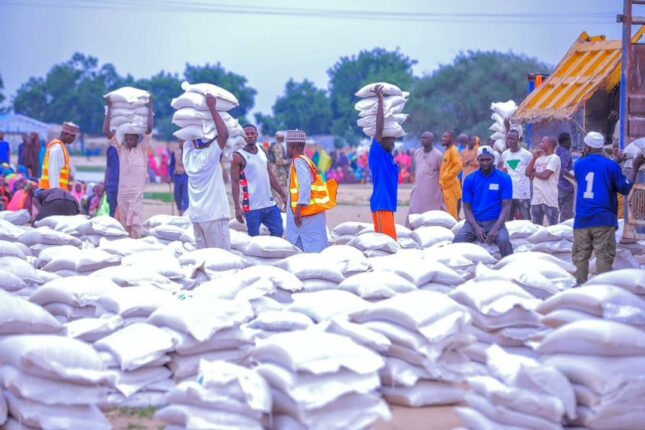
The Minister of Humanitarian Affairs, Disaster Management, and Social Development, Professor Nentawe Yilwatda, has outlined key protocols that event organizers must follow when planning future palliative distributions in the country to prevent stampedes and fatalities.
Yilwatda’s statement follows the tragic deaths during recent palliative distributions in Abuja, Ibadan, and Anambra. Speaking on Channels Television’s Morning Brief on Monday, the minister emphasized the importance of protocols such as event registration, police involvement, risk assessments, and vulnerability checks.
He expressed his condolences, stating, “First, I want to sympathize with the families and the nation for the lives lost. As a government, we are deeply saddened by the incident. However, despite our grief, we must focus on the safety measures that must be in place.”
The minister highlighted that the government distributes food more frequently than most organizations, often under harsher conditions, yet there are no reports of stampedes. He explained, “We distribute in areas with high levels of desperation, such as IDP camps, and yet we never experience incidents like this.”
Yilwatda continued, “When palliative distributions are not properly organized, incidents like stampedes and loss of lives are inevitable. This is not just an issue in Nigeria; stampedes occur worldwide, even in developed countries. You can’t simply open up distribution to anyone. For example, in Ibadan, a city with over 2 million people, it’s unreasonable to expect only 5000 people to show up. The same issue arises in Abuja, where a population of 2-3 million might result in a crowd of 2000. Social media exacerbates the problem, as it spreads the information widely, attracting many people.”
To prevent such tragedies, Yilwatda stressed the importance of registration for distribution, selecting beneficiaries, establishing designated distribution points, deploying police officers, and conducting vulnerability and risk assessments.
The minister called for the adoption of these security measures not only by the federal government but also by state and local governments, as well as organizations involved in charitable activities. “State governments must adopt these protocols, as the current guidelines are still at the national level. Local governments must also implement them, since most events are organized at the local and state levels. At the federal level, we manage fewer events. The police also have protocols that must be enforced, including registration requirements, with penalties for non-compliance,” he said.
When asked to elaborate on the protocols, Yilwatda explained: “For food distribution events, we notify the police and other security agencies, providing details of the location and expected attendance. We identify the beneficiaries and, in collaboration with the police, choose the distribution venues. We conduct vulnerability and risk assessments of the venue, set up a crowd management team, and ensure the team is in place before people begin arriving. If we anticipate an excessive crowd, we may decide to postpone the event.”
He also advised organizers with limited resources to reach out to the federal government for assistance in implementing the necessary protocols.
Authorities have called for calm as they continue to treat the injured following the stampede in Abuja.
