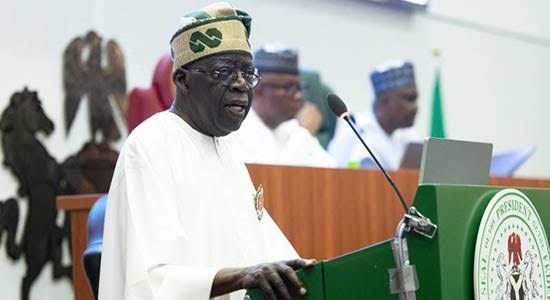
President Bola Tinubu on Monday highlighted his administration’s financial discipline, proudly stating that Nigeria has met its financial obligations for three consecutive months without relying on remittances from the Nigerian National Petroleum Company Limited (NNPCL) or borrowing through the Central Bank of Nigeria’s (CBN) Ways and Means facility.
“Push me to my brag mode,” Tinubu declared during a media chat at his Bourdillon residence in Ikoyi, Lagos. “In the last three months, I’ve not taken a penny from NNPC before I meet my other obligations. To me, that is excellent.”
The President emphasized that his government has avoided practices of the “old order” while fulfilling financial commitments. “Without falling back to Ways and Means, I’ve met all obligations,” Tinubu said, referring to a funding mechanism historically used to bridge budget shortfalls.
When asked if he was grading himself, Tinubu confidently responded, “Why not? Will you score me? I should grade myself if I do my homework right.”
The President’s remarks come amid ongoing scrutiny of Nigeria’s fiscal practices, especially the controversial use of Ways and Means under the previous administration. In September 2024, CBN Governor Olayemi Cardoso criticized his predecessor, Godwin Emefiele, for what he described as excessive money printing and injecting liquidity into the economy.
“In 2015, the money supply was about N19 trillion, and in 2023, it was N54 trillion,” Cardoso stated. “A substantial amount of that was through Ways and Means. Essentially, the printing of money resulted in a huge amount of money chasing the same amount of goods or a relative amount of goods.”
The Ways and Means facility allows the CBN to provide short-term financing to the Federal Government to address budget deficits. However, critics argue that its overuse contributes to inflation and economic instability.
President Tinubu’s assertion of financial prudence reflects his administration’s commitment to breaking away from unsustainable fiscal practices. While his confidence may draw praise, it also raises expectations for long-term financial stability and economic recovery.
As Nigerians grapple with inflation and other economic challenges, the government’s ability to sustain this approach without relying on traditional revenue streams like NNPC remittances or short-term borrowing will be closely monitored.