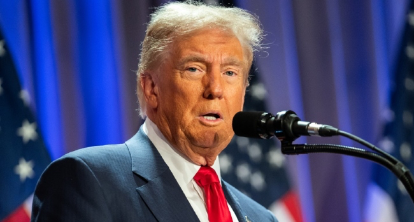
A federal appeals court on Monday upheld a jury verdict requiring President-elect Donald Trump to pay $5 million to writer E. Jean Carroll for sexually abusing and defaming her.
The case stems from allegations that Trump sexually abused Carroll, a former Elle magazine advice columnist, at a Manhattan department store in 1996. After a nine-day civil trial last year, a New York jury awarded Carroll $2 million for sexual abuse and $3 million for defamation. Trump denied the allegations and appealed the verdict, arguing that testimony from two other women who accused him of sexual assault should not have been permitted.
The Second US Circuit Court of Appeals rejected Trump’s arguments, stating that he failed to demonstrate any errors in the district court’s rulings or show that any alleged errors affected the outcome of the trial.
“We conclude that Mr. Trump has not demonstrated that the district court erred in any of the challenged rulings,” the three-judge panel wrote. “Further, he has not carried his burden to show that any claimed error or combination of claimed errors affected his substantial rights as required to warrant a new trial.”
In a separate case earlier this year, another jury awarded Carroll $83 million for defamation. Trump has also appealed that decision.
Meanwhile, Trump continues to face legal challenges as he prepares to take office. While two federal cases brought by special counsel Jack Smith—one involving mishandling classified documents and another on alleged efforts to overturn the 2020 election—have been dismissed under the Justice Department’s policy of not prosecuting sitting presidents, Trump was convicted in New York in May of 34 counts of falsifying business records related to a hush money payment to adult film actress Stormy Daniels.
Judge Juan Merchan recently denied Trump’s motion to overturn that conviction but has postponed sentencing indefinitely. The series of legal battles adds complexity to Trump’s return to the presidency, underscoring the unprecedented nature of his political and legal trajectory.
