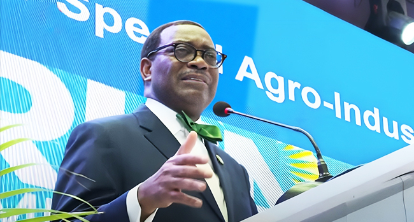
The African Development Bank (AfDB) is set to release a $2.2 billion fund to support the development of Special Agro-Industrial Processing Zones (SAPZ) in Nigeria, with the first phases of construction expected to begin in 2025. Abdul Kamara, Director General of the AfDB Nigeria Office, made the announcement during Channels Television’s 2024 End-Of-Year Review, highlighting the bank’s commitment to driving agricultural transformation in the country.
Kamara explained that the funding would be used to establish agro-industrial hubs, aggregation centres, and support agricultural processing and transformation initiatives. The project, initially approved by the AfDB Board in 2021, had experienced delays due to the complexities of signing agreements with the Federal Government and co-financiers, including the International Fund for Agricultural Development (IFAD) and the Islamic Development Bank.
The AfDB’s plan for the SAPZ involves collaboration with state governments, including those of Cross River, Ogun, Oyo, Kaduna, Kano, and Kwara, as well as the Federal Capital Territory (FCT). According to Kamara, discussions are already underway with the states to expedite the process, with bidding documents being published to streamline the project’s execution.
“Specifically from next year (2025), we will see contracts signed, and mobilization and construction on site will start in some states,” Kamara confirmed. However, not all states will begin simultaneously.
The $2.2 billion pledge was secured at the recent African Investment Forum, with AfDB acting as the convener and attracting additional co-financing from partners. Kamara noted that the AfDB’s contribution to the SAPZ is approximately $1 billion, with other contributors expected to increase the total funding.
This initiative is seen as a critical step in Nigeria’s agricultural development, aiming to boost food security, enhance value addition in agriculture, and create new economic opportunities in rural areas. The SAPZ project is expected to deliver significant growth in the agricultural sector, fostering long-term sustainability and improving livelihoods across the nation.
