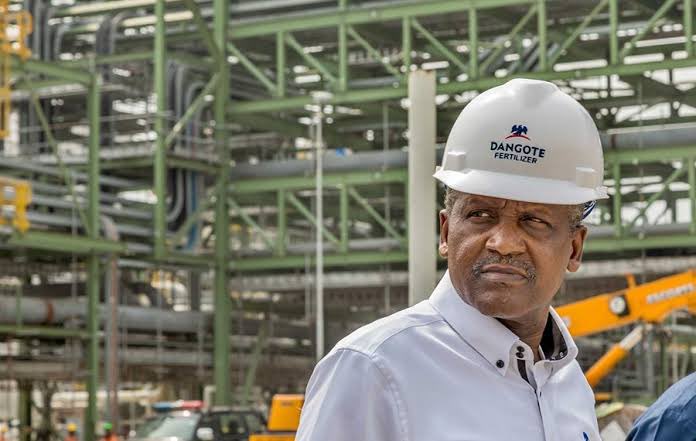
Aliko Dangote, founder of Dangote Petroleum Refinery, has called on the Nigerian government to end its petrol subsidy program, emphasizing that it is economically unsustainable. In an interview with Bloomberg TV on Monday, Dangote highlighted the global trend of eliminating fuel subsidies and stressed that Nigeria should follow suit.
“I think it is the right time to [remove the subsidy] because all countries have gotten rid of subsidy,” Dangote stated. He acknowledged the sensitivity of the issue but argued that subsidizing fuel leads to inflated prices, burdening the government with costs that should not be incurred.
Dangote also noted that the petrol sold locally by his refinery would be closely monitored to ensure transparency and accurate consumption data. He pointed out the current uncertainty around Nigeria’s actual fuel consumption, with estimates ranging from 60 million liters per day to much less. However, Dangote explained that with his refinery in operation, tracking would be implemented to provide clarity.
“But this refinery will bring quite a lot of issues out there. It would show the real consumption of Nigeria because nobody can tell… By us producing, everything can be counted and accounted for,” he said. He added that trucks and ships loading petrol from the refinery will be fitted with trackers to ensure that the fuel remains within the country, which could save the government significant amounts of money.
Dangote compared Nigeria’s fuel pricing to that of Saudi Arabia, stating that gasoline is about 40 percent cheaper in Nigeria than in Saudi Arabia, a situation he believes does not make sense given the country’s current economic challenges.
“Our price of gasoline is about 60 percent of the price of our neighboring countries, and we have porous borders, so it is not sustainable. The government cannot afford the amount of subsidies we are paying,” Dangote remarked. He argued that the continuation of subsidies is a decision for the government, but noted that it is ultimately unsustainable.
He also addressed the broader issue of profitability for his refinery, emphasizing that as a private company, they need to make a profit after investing $20 billion into the project.
“The removal of subsidy is totally dependent on the government, not on us… We built something worth $20 billion, and definitely, we have to make money,” he added.
On May 29, 2023, President Bola Tinubu announced the end of the petrol subsidy regime, but subsequent reports have sparked confusion about the government’s stance on the matter. In August, President Tinubu approved the use of NNPC’s final dividends to fund the petrol subsidy, leading to mixed messages from government officials. NNPC later confirmed that the government owes the company N7.8 trillion for past fuel subsidies.
As fuel prices and foreign exchange rates continue to rise, the debate over whether the petrol subsidy will make a return remains a contentious issue in Nigeria’s economic and political landscape. However, Dangote remains firm in his stance that the removal of the subsidy is inevitable for the country’s financial sustainability.
