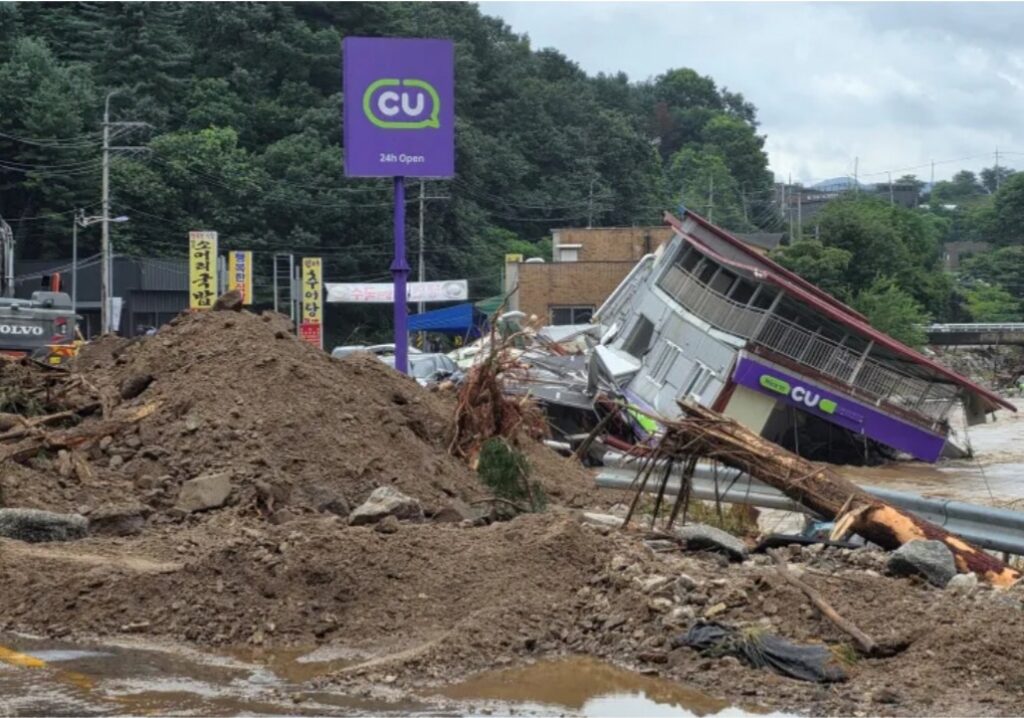
At least 18 people have been confirmed dead and nine remain missing following five consecutive days of torrential rain across South Korea. The intense downpours, which began on July 16, have triggered widespread landslides and flash flooding, forcing thousands to evacuate and prompting a nationwide emergency response.
The hardest-hit area was the southern county of Sancheong, where at least 10 people were killed, and four remain unaccounted for. The region saw multiple landslides that buried homes and severed access to roads, complicating rescue and recovery efforts.
In Gapyeong, a popular resort town northeast of Seoul, two people died one crushed in a house collapse and another swept away while camping near a river. Authorities used helicopters and zip lines to rescue others stranded by the rising waters.
The Ministry of the Interior and Safety reported that approximately 14,166 residents have been evacuated from at least 15 cities and provinces. Thousands of homes were inundated or damaged, and vital infrastructure including roads, bridges, and railways was heavily impacted.
President Lee Jae-Myung has designated the worst-affected areas as special disaster zones, enabling fast-tracked financial support and federal aid. Around 2,500 military personnel have been deployed to assist with rescue operations and debris removal.
While the rainfall has largely subsided and emergency alerts have been lifted, the Korea Meteorological Administration now warns of a dangerous heat wave expected to begin around July 24. Forecasts predict daytime temperatures could soar to 35°C (95°F) in several regions, posing a new threat to displaced residents and recovery teams.
This summer’s monsoon season has once again highlighted South Korea’s vulnerability to extreme weather events, which scientists say are becoming more frequent due to climate change.
