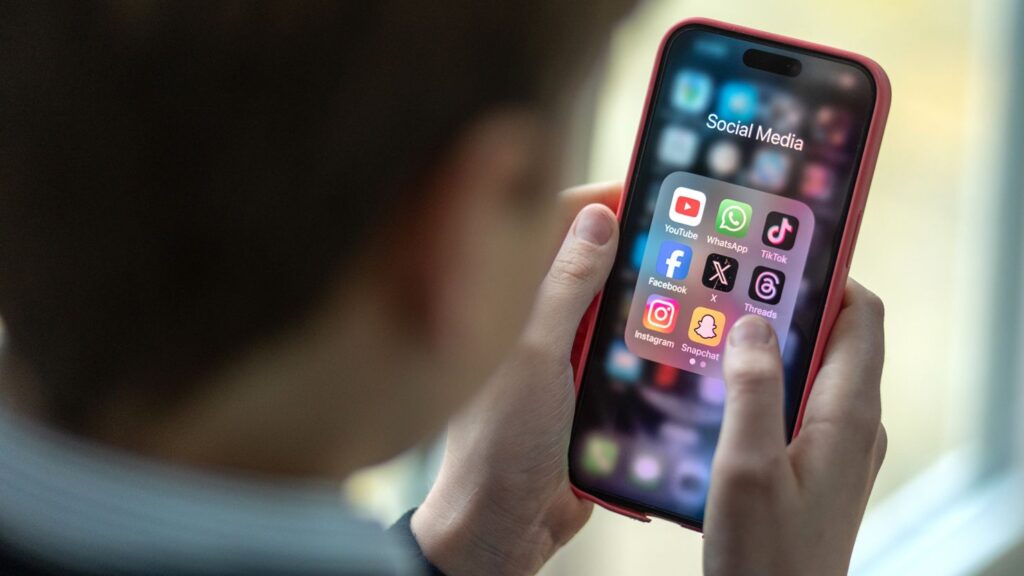
On Wednesday, Australian lawmakers moved closer to passing a landmark law that would ban social media access for children under the age of 16. The legislation, which passed the lower house of Parliament, will now be debated in the Senate.
If enacted, the law would require social media platforms like Facebook, Instagram, TikTok, and Snapchat to take “reasonable steps” to prevent young teens from creating accounts. Companies that fail to comply could face fines as high as AU$50 million (US$32.5 million).
While the bill has drawn support from Prime Minister Anthony Albanese, who has actively campaigned for it, social media companies have criticized the legislation as “vague,” “problematic,” and “rushed.” Albanese has rallied Australian parents to support the ban, arguing that social media fosters peer pressure, anxiety, scams, and is a tool for online predators. His goal, he says, is to encourage young Australians to spend more time outdoors, participating in sports rather than engaging with their phones.
Though the ban would be one of the strictest in the world, the legislation currently lacks specific details on how the rules will be enforced. It will take at least a year for regulators to finalize these details and implement the ban.
Many experts are skeptical about the law’s effectiveness, noting that age restrictions can often be bypassed easily. Recent amendments to the legislation clarify that social media platforms cannot require new users to submit government-issued IDs to verify their age.
Professor Terry Flew from the University of Sydney warned that the limited consultation around the bill might lead to “symbolic policy-making” instead of long-term solutions. The ban may also face legal challenges, and some platforms may be exempt. For instance, platforms like WhatsApp and YouTube could be excluded, as teens often use them for schoolwork or other activities. LinkedIn has also argued for an exemption, claiming its platform lacks content appealing to minors.
Social media expert Susan Grantham called the ban a “knee-jerk reaction,” saying it might have short-term benefits but could lead to unintended consequences, such as isolating young people who depend on online communities. Grantham also warned that banning mainstream platforms could push teens to create unregulated alternatives, which could be even more dangerous. She advocates for better digital literacy education, like Finland’s approach, where children as young as five are taught to think critically about online content.
The Australian legislation is being closely watched by other countries, with several considering similar measures. While proposals for teen social media bans have been raised in places like Spain and Florida, none have been implemented yet. Meanwhile, China has imposed strict online regulations for minors since 2021, limiting time on platforms like Douyin (TikTok’s Chinese counterpart) and restricting online gaming for children.
