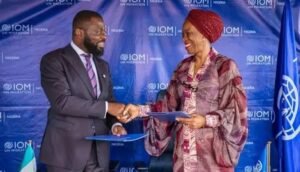
The Bank of Agriculture (BOA) has partnered with the International Organization for Migration (IOM) to establish a $200 million Agriculture and Livelihood Support Fund aimed at assisting internally displaced persons (IDPs), returnees, and vulnerable communities across Nigeria.
The fund, formalized through a Memorandum of Understanding (MoU) signed in Abuja, is designed to promote economic inclusion, financial access, and self-reliance among people affected by conflict, insecurity, and climate-related crises.
Speaking at the event, Ayo Sotinrin, Managing Director and Chief Executive Officer of BOA, said the partnership marks a shift from short-term humanitarian relief to long-term, sustainable development.
“This collaboration with IOM moves beyond emergency response. It focuses on empowering displaced Nigerians to rebuild their livelihoods through access to finance, training, and agricultural opportunities,” Sotinrin said.
IOM’s Deputy Director General for Operations, Ugochi Daniels, emphasized that the partnership aligns with Nigeria’s national development agenda and the African Union’s Agenda 2063, which prioritizes inclusive growth and resilience.
“Sustainable reintegration and community recovery are vital to promoting long-term stability and self-reliance,” Daniels noted.
Nigeria currently hosts more than 3.5 million internally displaced persons, many of whom have lost their farms, businesses, and homes due to ongoing conflicts and environmental challenges.
Under the initiative, beneficiaries will receive targeted support in agriculture, entrepreneurship training, and market linkages, helping them transition from dependency on aid to productive livelihoods.
The $200 million fund comes shortly after BOA announced a $1 billion agricultural intervention facility to boost smallholder farmers and strengthen Nigeria’s agricultural value chains part of the government’s broader strategy to enhance food security and rural development.
Development partners and UN officials have welcomed the initiative, describing it as a model for development-driven humanitarian response that could pave the way for durable solutions to displacement in Nigeria.
