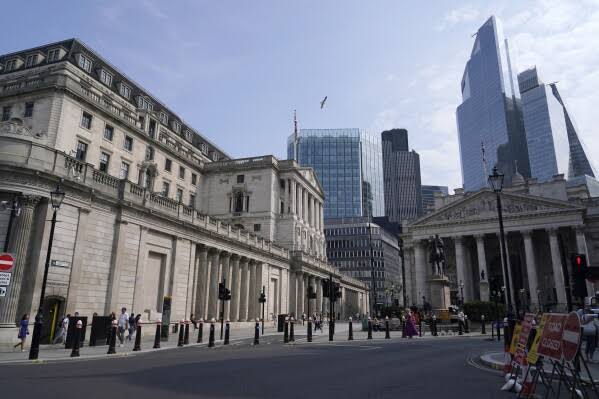
The Bank of England (BoE) announced on Thursday that it is lowering its key interest rate by 25 basis points to 4.75 percent, marking its second rate cut since August. The decision comes after UK inflation dropped to a three-year low, providing room for the BoE to ease borrowing costs. This move aligns with other central banks’ recent rate cuts aimed at stabilizing global economies.
BoE Governor Andrew Bailey cited the drop in the Consumer Prices Index (CPI), which now stands at 1.7 percent—below the BoE’s two-percent target. “We have been able to cut interest rates again,” Bailey stated, though he cautioned that further cuts would need to be measured to keep inflation near target. “We need to make sure inflation stays close to target, so we can’t cut interest rates too quickly or by too much,” he added.
The BoE’s announcement follows a wave of global rate adjustments. Earlier in the day, Sweden’s central bank implemented a significant 0.5 basis point cut, its largest in a decade, while Norway held rates steady. The US Federal Reserve is also expected to announce a rate reduction of 25 basis points later in the day, though analysts suggest it is unlikely to be influenced by the recent US election outcome.
This rate cut comes on the heels of Britain’s new Labour government’s first budget, which introduced tax increases and higher borrowing levels. The BoE had previously reduced its key interest rate in August from a 16-year high of 5.25 percent, marking its first cut since 2020. However, the central bank paused in September and held no policy meeting in October.
Between late 2021 and mid-2022, the BoE raised interest rates 14 times, moving them up from a record-low 0.1 percent as part of efforts to tackle post-pandemic inflation and economic instability following Russia’s invasion of Ukraine. Now, with inflation at manageable levels, the BoE signals a gradual path of rate reductions, aiming to support the UK economy while maintaining price stability.
