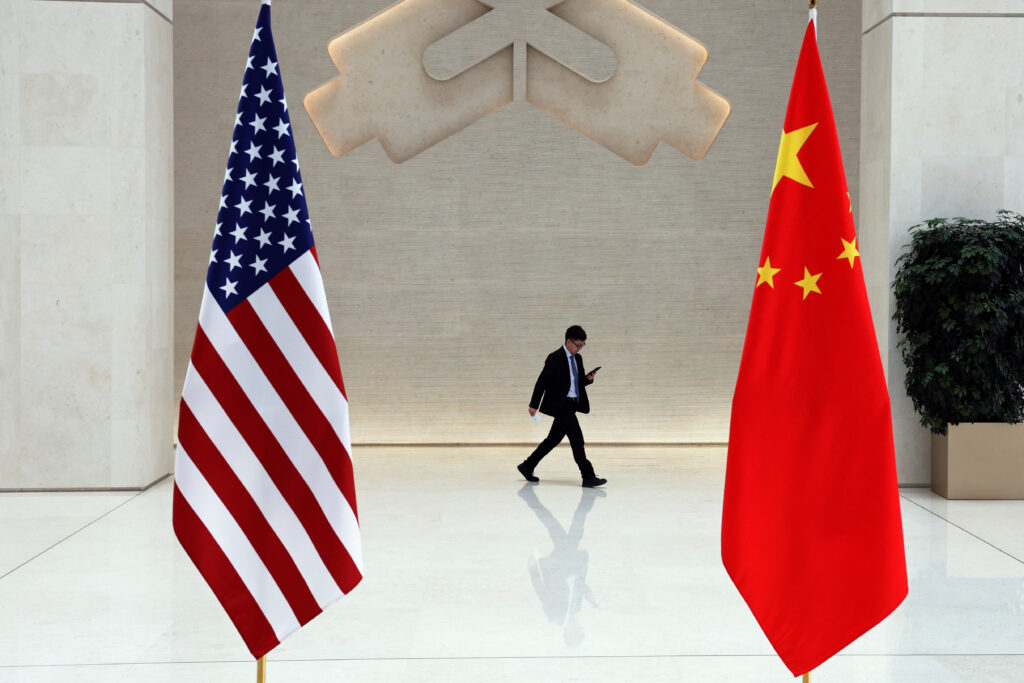
China issued a warning to the United States on Monday against taking “discriminatory actions” against its companies, following reports that Washington is considering banning the sale of vehicles utilizing Chinese and Russian technology.
Media outlets, including Bloomberg, reported on Sunday that the US is contemplating new regulations to prohibit hardware and software produced in China from being used in its vehicles.
In response, Chinese foreign ministry spokesman Lin Jian urged the US to “respect market principles” and to create an open, fair, transparent, and non-discriminatory business environment for Chinese enterprises.
“China opposes the US’s expanding interpretation of national security and the discriminatory measures against Chinese companies and products,” Lin stated. “China will firmly protect its legitimate rights and interests.”
If implemented, these new regulations would represent a significant escalation in the ongoing trade tensions between the US and China.
In May, the US announced substantial tariff increases on Chinese imports, including electric vehicles and semiconductors, totaling $18 billion. These tariffs target strategic sectors like EVs, batteries, critical minerals, and medical products.
The tariff rate on electric vehicles is set to quadruple to 100 percent this year, while the semiconductor tariff is expected to rise from 25 percent to 50 percent by next year.
These measures were finalized this month, just ahead of the November presidential election, where both parties are aiming to project a tough stance on China amid escalating competition between the two nations.
The recent tariff hikes follow a review of tariffs imposed during former President Donald Trump’s administration, which affected approximately $300 billion in Chinese goods. In addition to the tariff increases on solar cells, the US Trade Representative’s office confirmed that a 50 percent duty on semiconductors will begin in 2025.
US President Joe Biden has accused Beijing of “cheating” in its trade practices rather than competing fairly.
