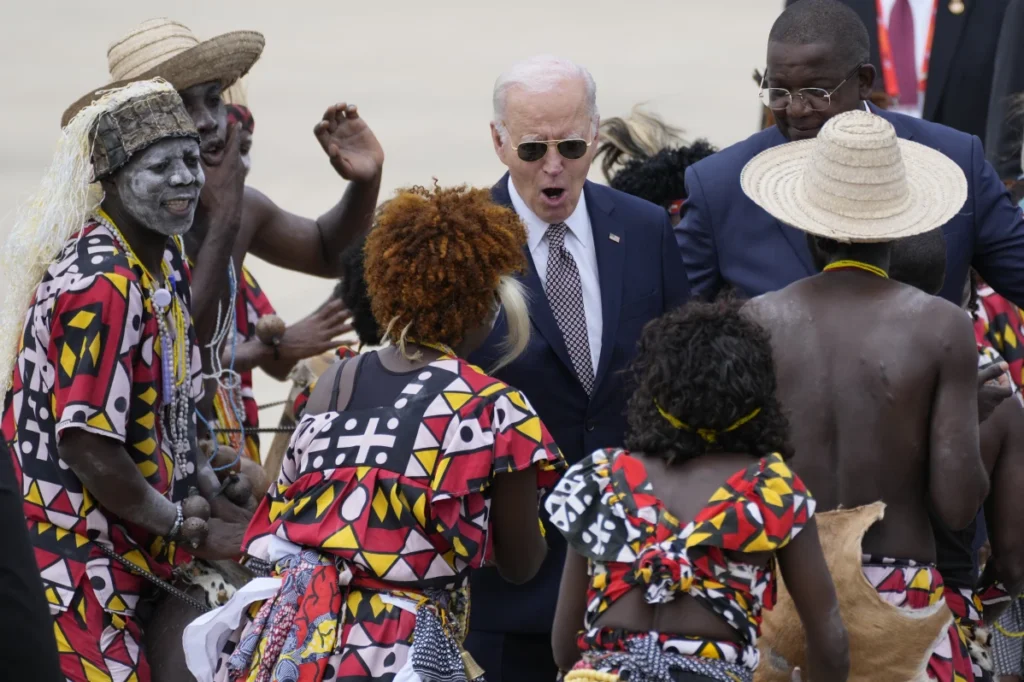
In a historic move on the final day of his presidency’s first trip to sub-Saharan Africa, President Joe Biden announced an additional $600 million investment in the Lobito Corridor railway project. The ambitious multi-country initiative aims to transform Africa’s connectivity and economic landscape.
Speaking in Lobito, Angola, at the Atlantic port terminal central to the project, Biden declared the U.S. commitment to addressing Africa’s long-standing marginalization in global development. “Africa has been left behind for much too long,” Biden said. “But not anymore. Africa is the future.”
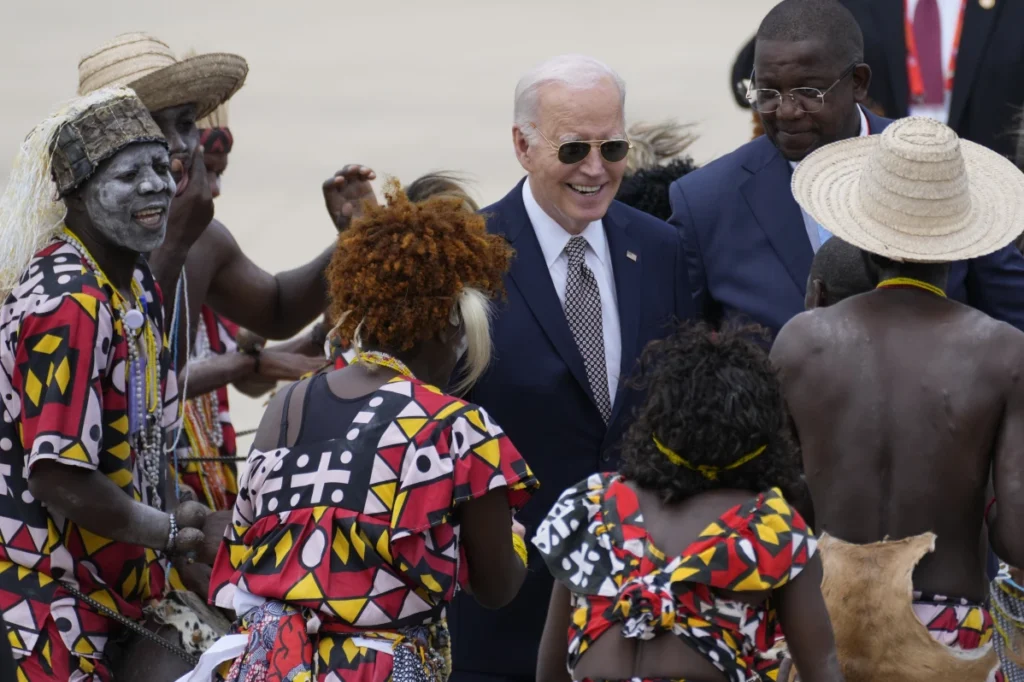
The Lobito Corridor, backed by $4 billion in U.S. funding and additional contributions from the European Union, G7 nations, private consortiums, and African banks, is now a $6 billion venture. The project will refurbish nearly 2,000 kilometers (1,200 miles) of rail lines, connecting Congo’s and Zambia’s mineral-rich regions to the Angolan coast, enabling faster, more efficient exports of critical minerals such as cobalt and copper.
The Lobito Corridor project has profound geopolitical implications, offering the U.S. a competitive edge in Africa’s mining sector, where China has long held dominance. Minerals like cobalt and copper are essential for producing electric vehicle batteries, electronics, and clean energy technologies. Biden positioned the investment as a direct counter to China’s Belt and Road Initiative, aiming to promote sustainable growth and long-term partnerships.
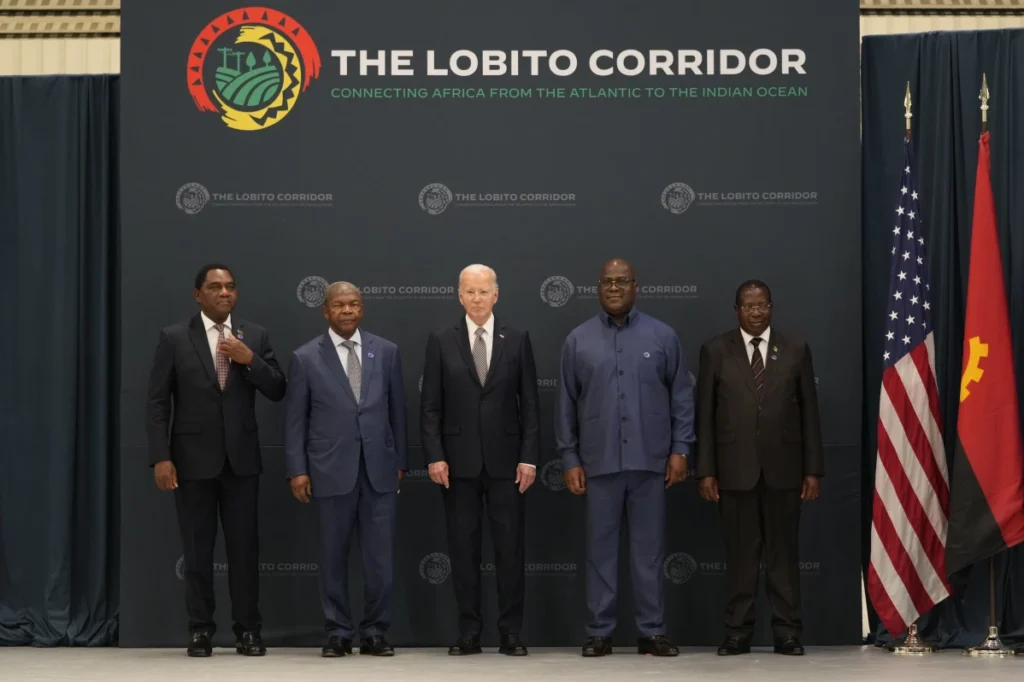
“This is about sparking investment and helping countries over the long term, not as a political adversary but from a business standpoint,” said a senior U.S. administration official.
The project was lauded by African leaders, including Congo President Félix Tshisekedi and Zambian President Hakainde Hichilema, who highlighted its transformative potential. Tshisekedi, whose country holds over 70% of the world’s cobalt reserves, described the corridor as a “driving force for economic and social transformation.”
Hichilema echoed the sentiment, emphasizing the potential for job creation, improved infrastructure, and economic growth for Africa’s burgeoning youth population. Biden added that the railway could turn the region into a net food exporter, with transport times for goods to the U.S. reduced from 45 days to just 45 hours.
“This is something that, if done right, will outlast all of us and keep delivering for generations,” Biden said.
As Biden prepares to leave office on January 20, the future of U.S. engagement in Africa will depend on the incoming administration of Donald Trump. Biden expressed optimism that bipartisan support for African development initiatives and strategic competition with China would sustain the project’s momentum.
The success in securing Angola, a country with historically strong ties to China, as a partner in the Lobito Corridor marks a significant diplomatic victory for the U.S. Biden expressed a desire to return to see the railway’s progress, joking with African leaders, “I want to come back and ride the whole thing.”
For now, the Lobito Corridor stands as a symbol of renewed U.S.-Africa engagement and a blueprint for future infrastructure partnerships around the world.
