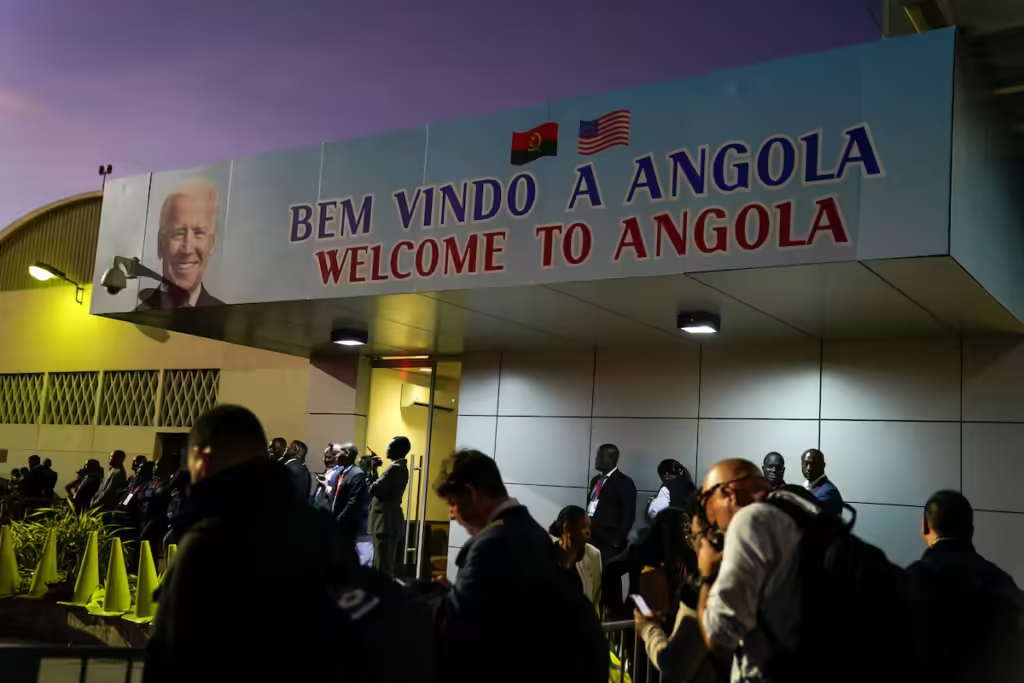
U.S. President Joe Biden made a historic visit to Angola on Tuesday, becoming the first sitting American president to travel to the sub-Saharan African nation. The trip underscores the shared history between the two countries, rooted in the transatlantic slave trade, and signals Washington’s strategic focus on forging stronger ties with Angola.
Biden’s first stop was the National Museum of Slavery in Luanda, where he addressed Angola’s significant role in the transatlantic slave trade. The museum, once owned by one of the largest enslavers on Africa’s coast, houses haunting artifacts such as shackles and iron weights used to punish enslaved people. Biden’s audience included Wanda Tucker, a Black American who traced her ancestry to Angolans forcibly transported to what is now Virginia in 1619.
“The story of Angola and the United States is deeply intertwined, and we must confront this painful history to build a better future,” Biden said during his remarks. He announced a $229,000 U.S. grant to restore the museum as a symbol of reconciliation and remembrance.
Angola was a major hub for the transatlantic slave trade, with 4 million of its people forcibly transported to the Americas, primarily to Brazil but also to North America. Biden’s visit comes as Angola and its former colonial ruler Portugal continue to address the legacies of slavery and colonialism. Portuguese President Marcelo Rebelo de Sousa recently acknowledged his country’s role in slavery, sparking national debates about reparations—a topic Biden is not expected to address on this trip.
Beyond historical reflection, Biden’s visit carries a strategic agenda. He is promoting a U.S.-backed railway project, the Lobito Corridor, which will connect mineral-rich regions of the Democratic Republic of the Congo and Zambia to Angola’s Atlantic port. The project aims to reduce reliance on China, which dominates mineral extraction in Congo and recently revived a rival railway to Africa’s eastern coast.
Biden met with Angolan President João Lourenço to discuss trade, security, and defense cooperation. The two countries plan to hold a defense meeting next year focusing on cyber and maritime security. Biden’s Angola trip also highlights Washington’s growing investment in Angola, which has traditionally maintained close ties with Russia for arms and China for economic projects.
On Wednesday, Biden will convene a summit with leaders from the Democratic Republic of the Congo, Tanzania, and Zambia, emphasizing regional cooperation. He will also tour the Lobito Corridor to showcase its potential as a cornerstone of U.S.-Africa economic relations.
Biden’s visit to Angola, one of his final foreign trips before leaving office, reflects his administration’s dual focus on addressing historical legacies and countering geopolitical rivals in Africa, while fostering partnerships for a more interconnected and equitable future.
