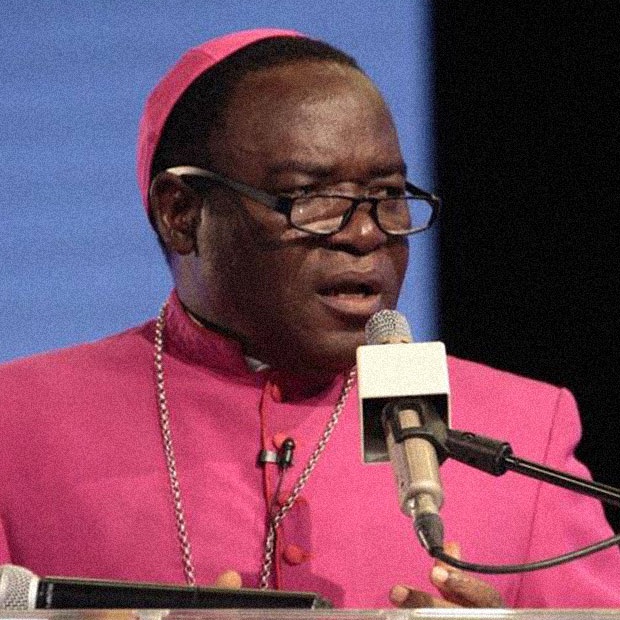
The Catholic Bishop of Sokoto Diocese, Matthew Hassan Kukah, has issued an emphatic plea to the United States government, urging it to resist renewed calls to redesignate Nigeria as a Country of Particular Concern (CPC) for severe religious freedom violations. Speaking from the Vatican, Bishop Kukah warned that such a punitive measure would destabilise fragile interfaith relations and embolden extremists.
Addressing an audience at the launch of the Aid to the Church in Need (ACIN) 2025 World Report on Religious Freedom in the World, the prominent cleric acknowledged that Nigeria remains deeply troubled by widespread violence, discrimination, and insecurity. However, he argued that branding the nation with the CPC status would ultimately undermine the grassroots efforts aimed at fostering peace and national reconciliation under President Bola Tinubu’s administration.
Bishop Kukah was unequivocal about the potential negative fallout, stating that the proposed designation would sabotage the work being done by religious leaders. He asserted: “Re-designating Nigeria a Country of Concern will only make our work in the area of dialogue among religious leaders even harder.”
He further elaborated on the social and security implications of the measure, cautioning against providing a pretext for further unrest. “It will increase tensions, sow doubt, open windows of suspicion and fear, and simply allow the criminals and perpetrators of violence to exploit,” he warned.
While acknowledging the grave security situation—including rampant banditry and the destruction of communities that has left millions internally displaced—Bishop Kukah stressed that Nigeria’s crisis is multifaceted. He cautioned the international community against the simplistic labelling of the issue as purely religious oppression, arguing that violence is driven by a complex interplay of weak governance, poverty, organized crime, and ethnicity.
The Bishop maintained that while impunity persists, the current Nigerian government has shown “genuine signs of inclusion” and a willingness to engage with religious leaders on issues of national healing. He urged the United States and international partners to offer support and collaboration, not condemnation, in the push for reform. The ultimate goal, he concluded, should be to help Nigeria “create a country of common citizenship” by strengthening its internal capacity to address its challenges.
