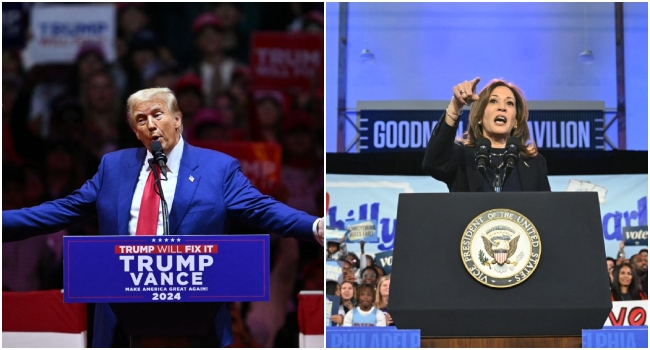
The U.S. presidential race has set the stage for a stark divide on climate policy, as former President Donald Trump and Vice President Kamala Harris represent opposing paths for America’s environmental future. While the candidates have yet to release comprehensive climate platforms, their contrasting stances are clear, with the outcome of the election likely to impact global efforts to combat climate change.
Trump, who famously dismissed climate change as a “hoax,” has pledged to undo the Biden-Harris administration’s climate-friendly policies if reelected. His victory could stall the U.S. green transition and undermine international climate agreements, including the Paris Agreement, from which he withdrew during his presidency—a decision Biden reversed after taking office. Trump has promised to reverse regulations intended to reduce carbon emissions and expand fossil fuel production, including lifting Biden’s restrictions on liquefied natural gas (LNG) exports and blocking new electric vehicle mandates.
A renewed Trump presidency would also affect U.S. participation in the upcoming COP29 UN climate summit, which starts just days after the election. Experts caution that if Trump wins, U.S. negotiators’ influence at COP29 could diminish, potentially limiting financial support for developing countries that are most vulnerable to climate change.
Harris, who attended COP28 and voiced support for phasing out fossil fuels, champions an opposite vision. While she has tempered her stance on certain issues, like fracking in swing states, her track record includes co-sponsoring the “Green New Deal” and supporting Biden’s Inflation Reduction Act (IRA), which incentivizes green energy investment. Harris has also led efforts against oil companies as California’s attorney general and voted to increase climate protections.
The IRA, a major legislative achievement of the Biden-Harris administration, has spurred historic investments in renewable energy, which Trump has vowed to roll back. However, experts say reversing the IRA could prove difficult, even within Republican circles, due to its economic benefits.
The environmental stakes of the 2024 election extend beyond U.S. borders. Carbon Brief, a climate analysis organization, estimates that a Trump victory could increase global emissions by an additional four billion tonnes of CO2 equivalent by 2030—a level equal to the combined annual emissions of the European Union and Japan. With climate policy becoming a defining issue in America’s future, the decision between Trump and Harris could shape the world’s environmental trajectory for years to come.