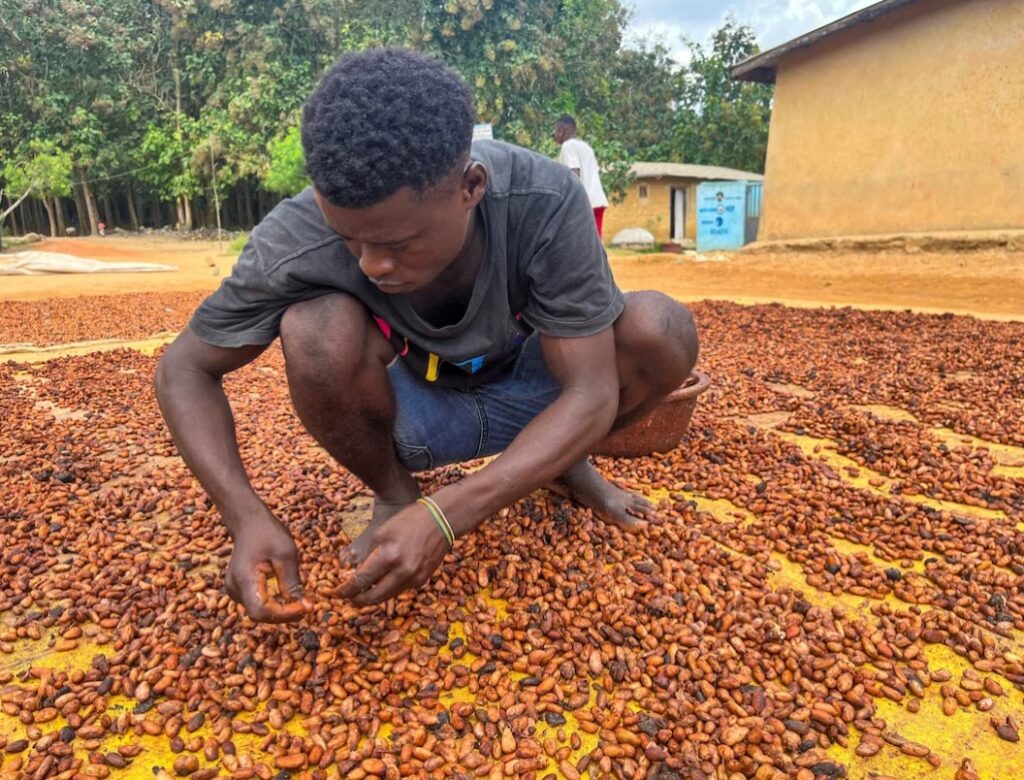
Cocoa farmers across Ivory Coast, the world’s largest producer, are growing increasingly concerned as cold weather and below-average rainfall threaten the health of the country’s main cocoa crop, due for harvest between October and March.
From Soubre to Yamoussoukro, growers report an unusual combination of overcast skies, persistently cool temperatures, and dry conditions factors that could severely impact the development of young cocoa pods. “If this continues for another two weeks, most of the cherelles will dry out and fall,” said Kouassi Armand, a farmer in Daloa, one of the country’s key cocoa-producing hubs.
Meteorological data show that rainfall last week in several cocoa-growing regions was significantly below the five-year average, with little to no sunshine conditions that are critical for healthy pod growth and bean development. Farmers warn that without a rapid change in weather, the 2025–26 main crop could suffer major losses.
Despite the grim outlook, many growers report that the current crop still shows a mix of mature and developing pods, and some expect an increase in bean availability by mid-August. However, a significant number are choosing to withhold sales, stockpiling beans in anticipation of a government price hike ahead of the country’s presidential elections in October.
Ivory Coast’s cocoa sector has already been under strain due to structural challenges, including aging plantations, disease outbreaks such as swollen shoot virus, and climate change. Industry sources now forecast a 10% drop in cocoa output across West Africa for the upcoming season, with Ivory Coast’s production expected to fall from over 2 million metric tons to around 1.6 million.
This production dip comes at a time of historic global cocoa shortages. Consecutive poor harvests in both Ivory Coast and neighboring Ghana have fueled a prolonged supply deficit, pushing global cocoa prices to record highs.
At present, the farm-gate price in Ivory Coast stands at 2,200 CFA francs per kilogram (about $3.90), but farmers expect significant increases as demand continues to outpace supply.
“Everyone is watching the skies,” said Amadou Diarra, a cooperative leader in Agboville. “We need sunshine and regular rains. Without that, we’re in trouble not just here, but worldwide.”
With the fate of the main crop hanging in the balance, all eyes are on the weather forecast for the next two weeks a critical period that may determine the trajectory of global chocolate markets in the months ahead.
