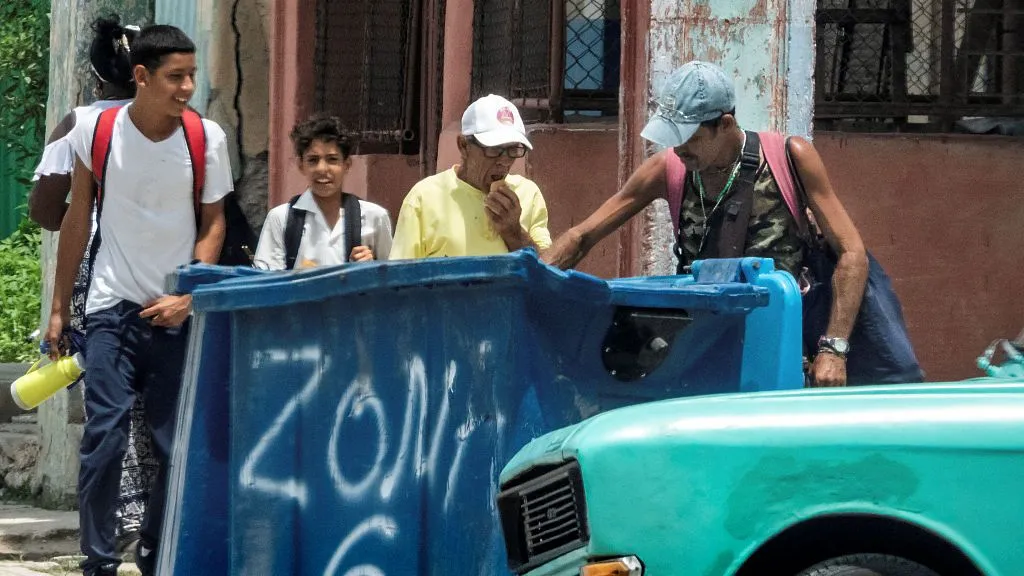
Cuban Minister for Labour, Marta Elena Feitó-Cabrera, has resigned following widespread backlash over her recent comments denying the existence of beggars on the island, a claim that exacerbated public anger amidst the country’s ongoing economic crisis.
Speaking at a National Assembly session, Feitó-Cabrera controversially stated, “There are no beggars in Cuba. There are people pretending to be beggars to make easy money.” Her remarks, which suggested that individuals seen rummaging through garbage were merely seeking “easy money,” immediately drew criticism both domestically and internationally.
In a biting response, Cuban economist Pedro Monreal took to social media, humorously challenging the minister’s statement: “It must be that there are also people disguised as ‘ministers’,” he wrote on X, highlighting the growing frustration with the disconnect between the government and the realities facing ordinary Cubans.
Feitó-Cabrera went further, labelling individuals searching through rubbish as “illegal participants in the recycling service,” a comment which was seen as an insensitive dismissal of the dire economic conditions gripping the nation.
Her comments, which many saw as a stark reflection of the Cuban leadership’s detachment from the struggles of its people, ignited a wave of condemnation. Cuban intellectuals and activists quickly mobilised, issuing a letter demanding her removal, condemning her words as “an insult to the Cuban people.”
The fallout from the comments did not go unnoticed by Cuba’s President, Miguel Díaz-Canel, who, though refraining from naming Feitó-Cabrera, addressed the issue during the same parliamentary session. He remarked that the government must avoid “condescension” and remain in touch with the realities of its citizens’ lives.
In the face of mounting pressure, Feitó-Cabrera’s resignation was swiftly accepted by both the Cuban Communist Party and the government. Although the Cuban government does not officially track the number of beggars, many Cubans have witnessed a sharp rise in visible poverty and begging on the streets, a phenomenon that has become increasingly apparent amid the island’s ongoing food shortages and deepening economic woes.
As Cuba continues to face significant economic hardships, including food shortages and power outages, the resignation of Feitó-Cabrera serves as a reminder of the volatile intersection between political leadership and public perception in a country grappling with its most severe economic crisis in decades.
