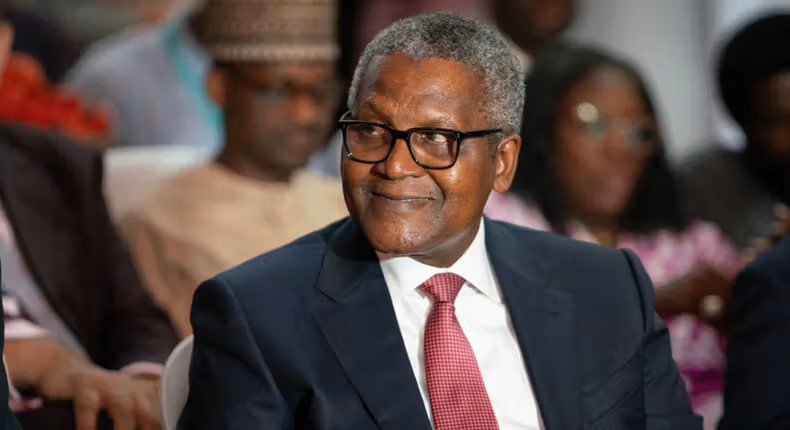
Alhaji Aliko Dangote, President of the Dangote Group, has expressed serious doubts about the future functionality of Nigeria’s state-owned refineries in Port Harcourt, Warri, and Kaduna, despite the government spending an estimated $18 billion on their rehabilitation.
Speaking on Thursday during a visit by members of the Global CEO Africa group from Lagos Business School to the Dangote Petroleum Refinery in Lekki, Lagos, the billionaire industrialist lamented the consistent failure of the Nigerian National Petroleum Company Limited (NNPCL) to revive the facilities.
“We bought those refineries in January 2007, but returned them after the government changed. The then MD of the refineries convinced President Yar’Adua that they could make them work. Since then, over $18bn has been spent, and they are still not functioning. I doubt very much if they ever will,” Dangote said.
He likened the repeated turnaround maintenance efforts to retrofitting outdated machinery with incompatible modern systems. “It’s like trying to modernise a car built 40 years ago with today’s technology. Even if you change the engine, the body won’t take the shock,” he said.
Dangote also noted the contrast between his 650,000-barrels-per-day refinery and the government-owned facilities, stating that over 50% of the Dangote refinery’s output is Premium Motor Spirit (PMS), compared to just 22% in government refineries.
His remarks echo those made by former President Olusegun Obasanjo, who last year revealed that international oil companies like Shell had declined his request to operate the refineries due to their poor condition. Obasanjo lamented that despite a $750 million acquisition deal by Dangote and others, his successor, President Umaru Yar’Adua, cancelled the transaction—allegedly due to pressure from NNPC officials.
“NNPC said they could run them, but I told Yar’Adua they couldn’t. And today, they’re still non-functional. Even selling them as scrap might not fetch $200 million,” Obasanjo said. He accused some officials of deliberately keeping the refineries inefficient to sustain corruption, stating, “In a civilised society, those people should be in jail.”
In recent months, calls for full privatisation of Nigeria’s refineries have intensified following repeated shutdowns. The 60,000 bpd Port Harcourt refinery, declared operational in late 2024, was shut down again six months later. Similarly, the Warri refinery, reopened in December, went offline within a month.
The Manufacturers Association of Nigeria and several crude refining experts have described the refineries as economic liabilities, urging the government to sell them off or convert them into funding sources for modular refineries.
Official records show that:
• $1.4 billion was approved for Port Harcourt refinery’s rehabilitation in 2021.
• Warri and Kaduna refineries were allocated $897 million and $586 million, respectively.
• An estimated ₦100 billion was spent in 2021 alone on refinery rehabilitation.
• $396.33 million went into Turnaround Maintenance from 2013 to 2017.
Despite these massive expenditures, the refineries remain largely unproductive.
As of press time, the NNPCL has not responded to media inquiries. Efforts to reach officials via contacts listed on the company’s website were unsuccessful.
