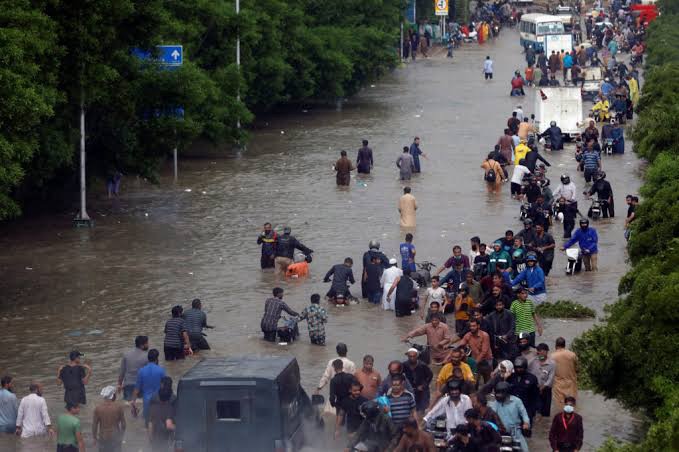
Torrential monsoon rains have unleashed widespread devastation across Pakistan’s Punjab province, claiming at least 63 lives in a single day, officials confirmed on Thursday. The powerful downpours struck on July 16, inundating cities, collapsing buildings, and triggering deadly electrocutions as water levels surged past historical averages.
The worst-hit region, Chakwal, recorded a staggering 423 millimeters of rainfall more than double the city’s typical July average. The torrential system originated in northwest India, intensifying as it moved westward into Pakistan. Swiftly rising floodwaters overwhelmed riverbanks, sweeping through villages and low-lying urban areas with little warning.
According to disaster response teams, many of the victims were children, with building collapses and electrocution incidents accounting for most of the fatalities. Authorities report that since the onset of the monsoon in late June, the death toll nationwide has surged to nearly 180.
“This level of rain in such a short period is unprecedented. Emergency teams are stretched thin,” said an official from Pakistan’s National Disaster Management Authority. Rescue operations are ongoing, with boats and helicopters deployed to evacuate stranded residents.
Pakistan, a country acutely vulnerable to climate change, has witnessed an alarming uptick in climate-fueled disasters over the past decade. The country’s geography and infrastructure particularly in flood prone areas like Punjab and Sindh leave millions exposed during monsoon season.
A Regional Crisis
The effects of this intense weather system are also being felt beyond Pakistan:
In Nepal, a glacial lake outburst flood on July 8 triggered a deadly surge in the Langtang region, killing at least seven people and destroying critical infrastructure. Scientists warn that such Himalayan “tsunamis” are becoming more frequent as glaciers melt due to rising global temperatures.
In the United States, parts of the Northeast were battered by record rainfall. New York City saw its second-wettest hour ever, while New Jersey received over 150 mm of rain in just a few hours, prompting a state of emergency and causing two fatalities.
Climate Warnings Mount
Experts say the scale and frequency of these events are consistent with climate models predicting more extreme rainfall and weather variability as global temperatures rise. A 2024 UN climate report named South Asia among the world’s most vulnerable regions to hydrological extremes, citing population density and outdated infrastructure as key risk factors.
As Pakistan braces for more rain in the coming weeks, humanitarian groups are calling for increased international support and long-term investments in climate resilience.
