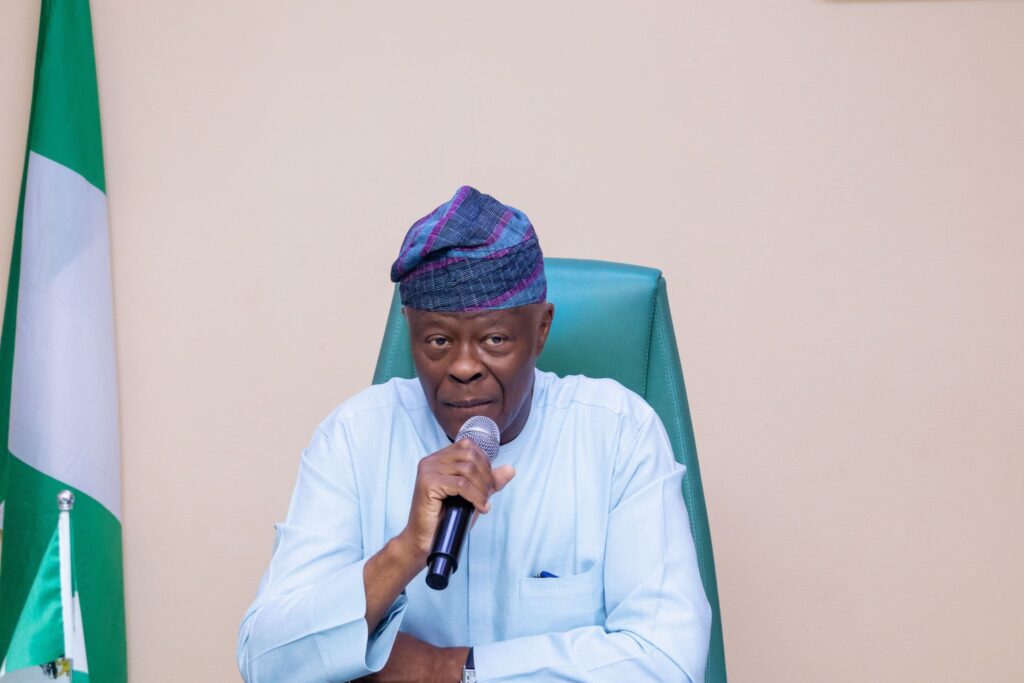
Nigeria’s Minister of Finance and Coordinating Minister of the Economy, Mr. Olawale Edun, has strongly defended the economic reforms initiated by President Bola Ahmed Tinubu, describing them as difficult but necessary steps toward stabilising the nation’s economy and charting a path to sustainable growth.
Speaking on Tuesday through the Special Adviser to the President on Finance and Economy, Sayande Okoli, at the 13th BusinessDay CEO Forum in Lagos, Edun highlighted the administration’s bold approach to dismantling long-standing economic distortions, particularly the removal of fuel and foreign exchange subsidies.
“The theme of this year’s summit, ‘From Reform to Recovery’, aptly captures Nigeria’s current economic journey,” Okoli said on behalf of the minister. “Over the past two years, we’ve been undertaking bold and necessary reforms.”
Edun explained that the first phase of the reforms began on President Tinubu’s inauguration day—May 29, 2023—when the president announced the removal of the fuel subsidy. He noted that this move, along with the liberalisation of the foreign exchange market, was a critical signal to both local and international investors.
“As part of the transition team, I represented Nigeria at the World Bank/IMF Spring Meetings in April 2023,” Okoli quoted the minister. “The feedback was unanimous: until we address the twin evils of fuel and foreign exchange subsidies, investors won’t engage. President Tinubu’s immediate action on May 29 was not unplanned; it was urgent and deliberate.”
She acknowledged the public hardship that followed these reforms—most notably inflation and currency volatility—but emphasised that stabilising the macroeconomic environment became the next priority.
“Once subsidies were removed, the naira depreciated and inflation surged. Stability became a priority because no investor would come into an unstable environment,” she said.
According to Okoli, the second phase of the reform strategy focuses on consolidating stability and building the foundation for recovery and inclusive growth. She also stressed the importance of open dialogue between the government and the private sector.
“For someone who sits in a senior government position, attending sessions like this and taking notes is crucial,” she added. “What businesses, media, and other policymakers say must inform our approach.”
The BusinessDay CEO Forum, now in its 13th year, is one of Nigeria’s premier gatherings of corporate executives, policymakers, and thought leaders. This year’s edition explored pathways from economic reform to recovery, amid Nigeria’s ongoing efforts to attract investment and stimulate industrial growth.
Despite public concerns over rising living costs and currency depreciation, the federal government maintains that these reforms are essential to reversing decades of fiscal mismanagement and unlocking Nigeria’s economic potential.
