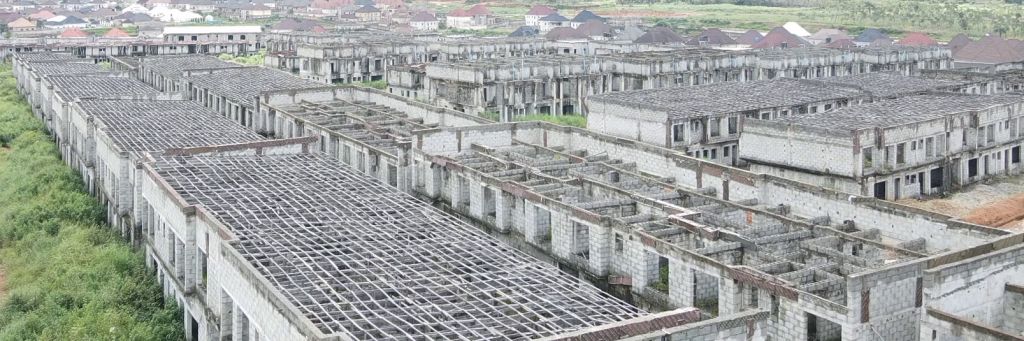
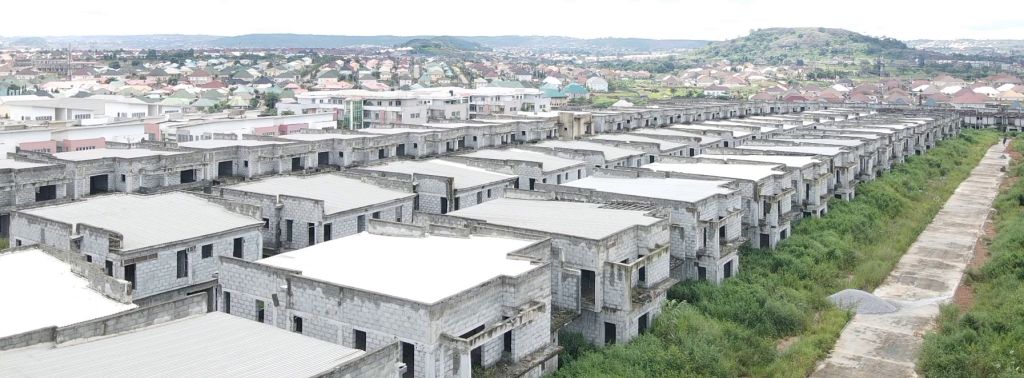
The Economic and Financial Crimes Commission (EFCC) has announced its largest asset recovery since its establishment in 2003. On Monday, Justice Jude Onwuegbuzie of an Abuja court ordered the final forfeiture of an estate comprising 753 duplexes and other apartments, valued at approximately 150,500 square meters, to the federal government.
According to the EFCC, the estate, located on Plot 109, Cadastral Zone C09, Lokogoma District, Abuja, was owned by a former senior government official and was acquired through proceeds of unlawful activities.

This is the single largest asset recovery by the EFCC,” the agency said, highlighting that the forfeiture aligns with its mandate to prevent corrupt individuals from benefiting from the proceeds of their crimes.
The ruling followed an interim forfeiture order secured on November 1, 2024, after the EFCC invoked Section 17 of the Advance Fee Fraud and Other Fraud-Related Offences Act, 2006 and Section 44(2)(b) of Nigeria’s Constitution. Justice Onwuegbuzie ruled that the respondent failed to provide sufficient evidence to justify ownership of the property, stating, “The property is hereby finally forfeited to the federal government.”
The EFCC confirmed that the government official responsible for constructing the estate is under investigation. The forfeiture, the commission stated, is part of its broader strategy to deprive suspects of assets derived from criminal activities.
EFCC Chairman Ola Olukoyede emphasized the importance of asset recovery in the fight against corruption. Speaking to the House of Representatives Committee on Anti-Corruption, he noted, “Asset recovery is pivotal in the anti-corruption fight. The moment we begin an investigation, we also start asset tracing. If you allow the corrupt to access the proceeds of their crime, they will use it to fight back. Depriving them of these assets weakens their resistance.”
The EFCC’s Establishment Act places a strong focus on asset recovery, requiring the commission to trace, seize, and secure interim forfeiture orders for properties suspected to be linked to economic crimes. These interim orders are then escalated for final forfeiture rulings, as demonstrated in this case.
The recovery, the EFCC said, underscores President Bola Ahmed Tinubu’s commitment to the anti-corruption agenda and represents a significant milestone in the agency’s operations.
