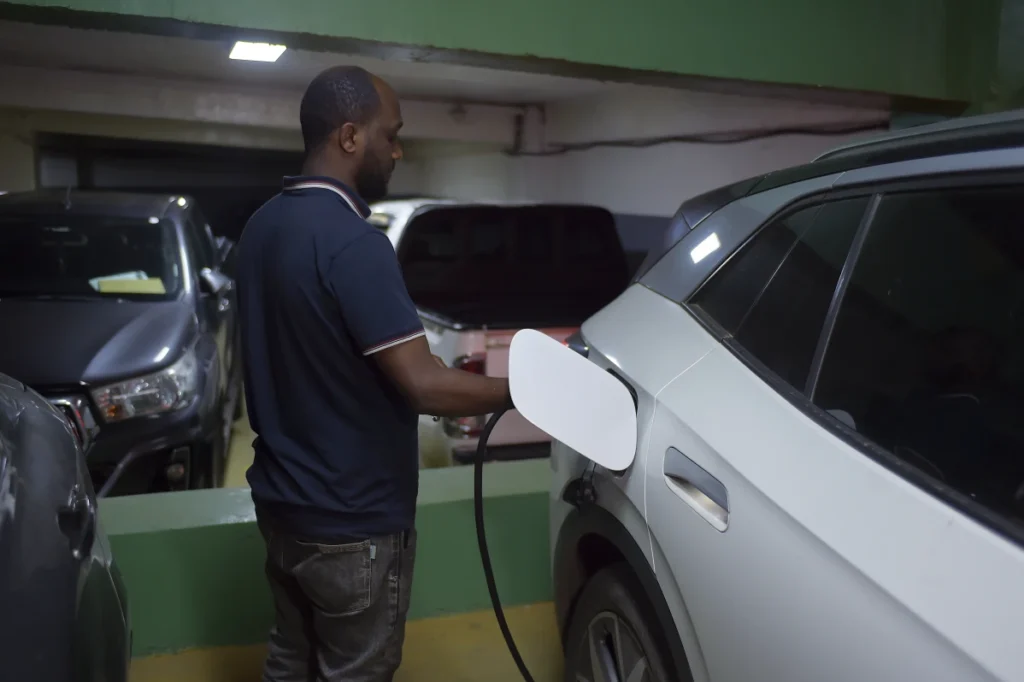
Amid rising fuel prices earlier this year, Awgachew Seleshi decided to switch to an electric car, aligning with the Ethiopian government’s initiative to phase out gas-powered vehicles. However, he now finds himself grappling with significant obstacles that raise doubts about his decision.
Living in Addis Ababa, Seleshi struggles with inconsistent electricity supply, limited availability of spare parts, and the high costs associated with maintenance. “Charging my car has been a challenge,” he lamented. “Spare parts imported from China are expensive, few mechanics can repair these vehicles, and their resale value is low.”
Seleshi’s experience highlights the broader challenges facing Ethiopia in its push for electric vehicles. In January, the country became the first in the world to ban the import of non-electric private vehicles, a move aimed at reducing the financial burden on the government caused by fuel subsidies. However, this ban also underscores the growing interest in electric vehicles as nations seek greener technologies to combat climate change.
Earlier this month, the Ethiopian government increased fuel prices by up to 8% as part of a strategy to gradually eliminate fuel subsidies in Africa’s second-most populous nation. Officials report progress in enforcing the ban, with over 100,000 electric cars now entering the country each month. The government aims to boost that number to 500,000 by 2030, coinciding with the expected full operational capacity of the Grand Renaissance Dam, which Prime Minister Abiy Ahmed announced will generate over 5,000 megawatts of electric power within a year.
Despite these optimistic goals, many residents of Addis Ababa, a city of over 5 million, express skepticism about the country’s ability to support such an ambitious electric vehicle transition without significant improvements in infrastructure. Few garages are equipped to repair electric vehicles, leaving many owners with cars inoperable due to a lack of parts. “There are only two or three garages that can fix new energy vehicles in Ethiopia, and many consumers are unaware of how to maintain them,” noted Yonas Tadelle, a mechanic in the capital. He added that mechanics often lack the necessary tools and expertise for repairs.
As a result, many electric vehicles sit idle in garages and parking lots, waiting for spare parts expected to arrive from China. Ethiopia’s Minister of Transport, Bareo Hassen Bareo, remains optimistic about the nation’s green economy aspirations, emphasizing plans to invest in public charging stations and establish a local plant for manufacturing electric vehicle batteries to reduce import dependency.
Private initiatives, such as a collaboration between Olympic champion Haile Gebreselassie and South Korean automaker Hyundai to produce electric vehicles in Ethiopia, have reportedly faltered due to challenges in sourcing materials. Economist Samson Berhane pointed out that the influx of electric vehicles into a market lacking adequate infrastructure complicates the transition for consumers. “Very few people are willing to take the risk of buying electric cars due to the lack of infrastructure and the shortage of mechanics specialized in EV maintenance,” he explained, noting that many electric cars on the market come from China and lack long-term reliability.
Despite these hurdles, Berhane believes Ethiopia can provide enough electricity for the anticipated 500,000 electric vehicles over the next decade while pursuing its industrial goals. However, the continued popularity of gasoline-powered vehicles remains evident, with a significant secondhand market thriving as some Ethiopians reconsider their electric vehicle investments. Currently, Ethiopia has at least 1.2 million vehicles, with only a small percentage being electric.
