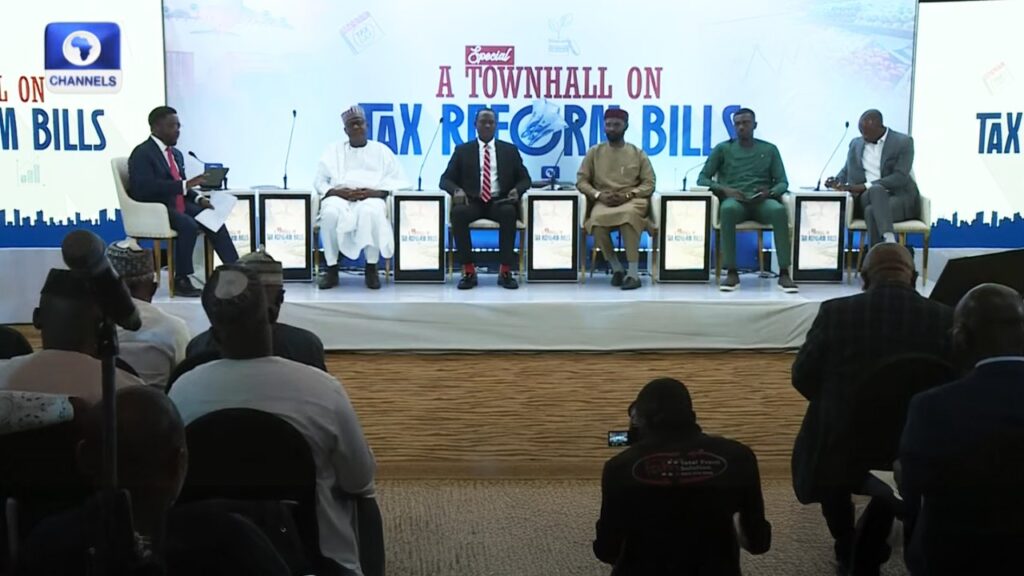
As debate over Nigeria’s proposed Tax Reform Bills intensifies, experts are calling for restraint and patriotism, emphasizing the transformative potential of the reforms while addressing widespread concerns.
Since their introduction and subsequent submission to the National Assembly, the bills have drawn sharp criticism across the country. Detractors, particularly in the northern region, argue the reforms will disproportionately burden Nigerians, with some even accusing the government of regional bias.
However, during a Special Town Hall Meeting aired on Channels Television, prominent figures sought to clarify the contentious issues and propose solutions. The panel featured the Chairman of the Presidential Fiscal Policy and Tax Reforms Committee, Taiwo Oyedele; former Speaker of the House of Representatives, Yakubu Dogara; Global Investment and Trade Company CEO, Baba Yusuf; Public Affairs Analyst Micheal Chibuzor; and a former President of the Institute of Chartered Accountants of Nigeria. Nasarawa State Governor Abdullahi Sule also weighed in via telephone.
Key Issues Addressed
Governor Sule noted that while state governors are not opposing the bills outright, they seek clarity on specific provisions. Highlighting concerns over the proposed Value Added Tax (VAT) increase from 20% to 60% at the point of generation, Sule expressed relief at adjustments clarifying its application to consumption.
“The governors said, ‘Why don’t you withdraw the bills, let us discuss them and understand them?’” he stated.
Oyedele, who spearheaded the drafting of the bills, urged Nigerians to focus on the broader objectives of the reforms. He highlighted the over 200 transformative provisions aimed at enhancing economic prosperity.
“We should not allow one or two provisions that we can easily discuss and agree on to obstruct the passage of these bills,” Oyedele said, acknowledging the imperfections but arguing that withdrawal was not an ideal solution.
Addressing Allegations
Responding to claims that the reforms were designed to empower private consultants, similar to the Lagos State Alpha Beta arrangement, Oyedele dismissed such assertions as baseless. He assured Nigerians that existing systems like the Federal Inland Revenue Service (FIRS) TaxPro Max could handle revenue collection effectively without external consultants.
Calls for Unity and Understanding
Yakubu Dogara appealed for calm, particularly from northern critics. “This is not the time to condemn the president or label him anti-north,” he said. Dogara emphasized the significance of President Bola Tinubu’s reforms, describing them as bold steps toward economic rejuvenation.
Baba Yusuf supported this view, labeling the reforms “one of the best efforts by this administration” and predicting significant benefits for Northern Nigeria.
Micheal Chibuzor, a public affairs analyst, praised the transformative potential of the bills but stressed the need to overhaul Nigeria’s revenue model to ensure equitable outcomes. Economist Paul Alaje also expressed optimism, giving the reforms a passing grade while flagging certain areas for further review.
A Call to Action
As the debate continues, the overarching sentiment from the experts is clear: the reforms, though imperfect, represent an opportunity to reshape Nigeria’s economic landscape. Stakeholders are urged to approach discussions with patriotism and a willingness to collaborate, ensuring the reforms serve all Nigerians equitably.
