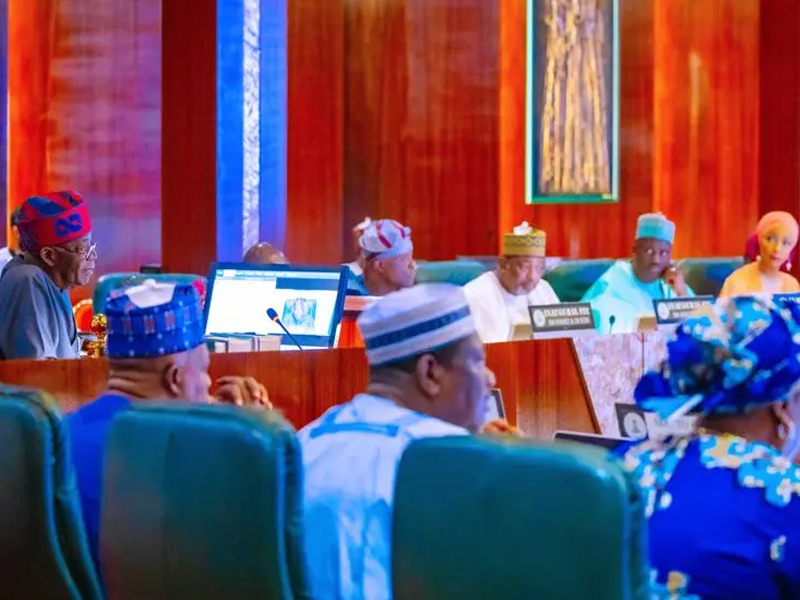
The Federal Executive Council (FEC) has approved the establishment of the Creative Economy Development Fund (CEDF) and the launch of an Intellectual Property (IP) Monetisation Pilot, marking a milestone for Nigeria’s creative industry. The announcement came after Wednesday’s FEC meeting, presided over by President Bola Ahmed Tinubu, where the Minister of Art, Culture, and the Creative Economy, Hannatu Musa Musawa, presented the proposal.
The CEDF aims to support Nigeria’s burgeoning creative sector by providing financial backing to artists and entrepreneurs through diverse financial instruments, such as debt, quasi-equity, and equity. “The CEDF is a transformative step for Nigeria’s creative industry,” Musawa stated. “Our goal is to empower young creatives, creating pathways for them to turn their talents into sustainable careers.”
The ministry collaborated with the Ministries of Justice, Finance, Industry, Trade, and Investment, along with the Federal Inland Revenue Service and the Nigerian Copyright Commission, to ensure the success of both the CEDF and IP Monetisation Pilot. Set up as a Special Purpose Vehicle (SPV), the CEDF will not only fund creative projects but will also introduce a unique model for using IP assets as collateral. This approach seeks to “democratise access to finance” by lowering entry barriers for creatives and offering innovative, non-traditional funding solutions.
The IP Monetisation Pilot, developed in collaboration with the African Development Bank’s iDICE programme, is expected to provide insights for a comprehensive National IP Monetisation Framework. This framework will ultimately be integrated into the National IP Policy, aiming to establish IP assets as reliable financial resources within the Nigerian economy.
Musawa emphasized the economic potential of IP securitisation, saying that these initiatives will help create a robust IP asset base, facilitate IP-backed financing, and build investor confidence. The ministry has also proposed the CEDF Act to secure sustainable funding and establish a long-term administrative and governance structure, with potential support from multilateral donors.
The success of these initiatives will be measured by their ability to improve access to finance for creatives, foster a vibrant creative business environment, and generate new revenue streams through IP, Musawa noted. With these steps, Nigeria’s creative industry is poised for enhanced growth, promoting national identity while creating economic opportunities for young talents across the nation.