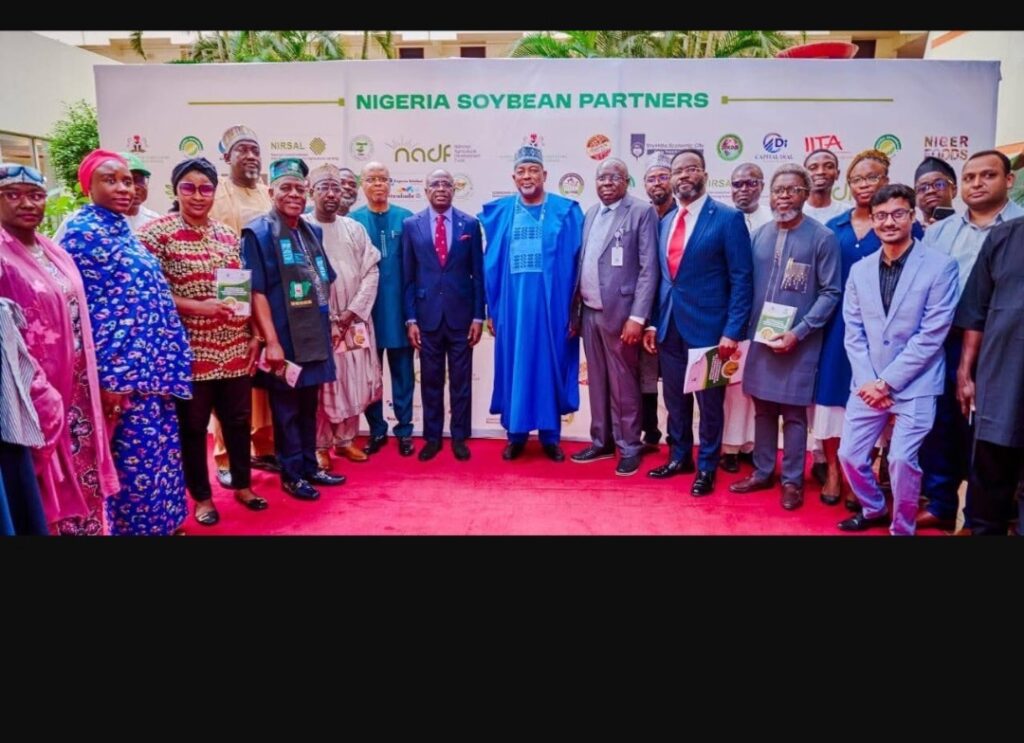
In a bold move to boost food security and industrial growth, the Federal Government has launched the National Soybean Production Expansion Policy & Strategy, aiming to cultivate one million hectares of soybean farmland and generate over N3.9 trillion in annual revenue. The initiative is also projected to create one million jobs across 22 states and the Federal Capital Territory.
Unveiled on July 22, 2025, the policy is a key component of the government’s Renewed Hope Agenda, which seeks to drive agricultural transformation, reduce reliance on imports, and position Nigeria as a global player in soybean production and processing.
Closing the Supply-Demand Gap
Nigeria currently produces around 1.35 million metric tonnes of soybean annually only half of its estimated national demand of 2.7 million metric tonnes. With soybean being an essential ingredient in poultry feed and a rich source of high-quality, non-GMO protein, this expansion is both a nutritional and economic imperative.
Under the new strategy, the government plans to inject 460,000 metric tonnes into the market over the next two years. The policy also aims to develop key infrastructure such as silos, aggregation centers, and transport networks to minimize post-harvest losses and ensure seamless value chain integration.
Benue State Takes Center Stage
As Nigeria’s leading soybean-producing region, Benue State is expected to play a pivotal role in the rollout. The state plans to double its current output of approximately 202,000 tonnes to 400,000 tonnes within three years.
Governor Hyacinth Alia announced the state’s launch of the Soybean Seed Multiplication and Distribution Programme, which aims to improve yields from 1.2 to 3 tonnes per hectare and reach over 200,000 farmers. The program is backed by significant infrastructure investments, including a Food City Complex designed to promote agro-processing and exports.
Benue anticipates the creation of more than 100,000 jobs in farming, logistics, warehousing, processing, and trade.
A National Economic Engine
According to government projections, the soybean initiative could add more than N3.9 trillion annually to Nigeria’s GDP. Employment opportunities will span both on-farm and off-farm sectors, supporting rural livelihoods while promoting agro-industrialization.
Minister of Agriculture and Food Security, Senator Abubakar Kyari, emphasized the government’s commitment to creating a sustainable soybean ecosystem. “This policy is not just about farming it’s about building an industrial value chain that is competitive globally and impactful locally,” he said.
Strategic Partnerships and Private Sector Involvement
To ensure success, the Federal Government is calling for increased collaboration with private sector players, financial institutions, and development partners. Mechanization, extension services, and access to improved seeds are central pillars of the rollout.
The soybean strategy is expected to support key industries, including poultry, aquaculture, food manufacturing, and bioenergy.
Bottom Line: With bold ambitions and a clear roadmap, Nigeria is positioning itself for a soybean revolution promising improved nutrition, job creation, and significant revenue. If successfully implemented, the policy could redefine the agricultural and economic landscape of the nation.
