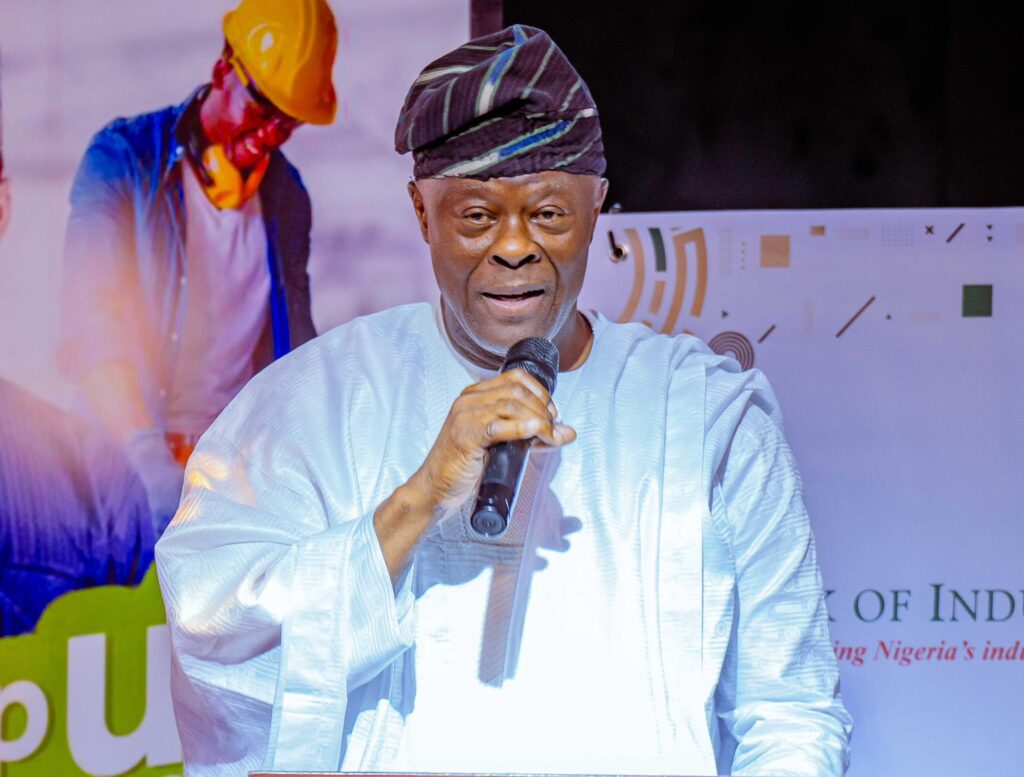
The Nigerian government has reiterated its need for additional borrowing to fund the budget despite some Ministries, Departments, and Agencies (MDAs) surpassing their revenue targets. Minister of Finance and Coordinating Minister of the Economy, Wale Edun, defended this position during an interactive session with the Senate Joint Committees on Finance, National Planning, and Economic Affairs regarding the 2025-2027 Medium-Term Expenditure Framework (MTEF) and Fiscal Strategy Paper.
Edun emphasized that borrowing would be both “productive and efficient,” with the Senate’s approval required to ensure proper budget funding. He stated, “The revenue effort has been good, but we still need to do better. In the meantime, we need to borrow productively, effectively, and sustainably to invest in the Nigerian economy—not just in infrastructure, but also in social services, health, education, and safety net programs for the poorest and most vulnerable.”
Similarly, Minister of Budget and Economic Planning, Senator Atiku Bagudu, defended the borrowing plans embedded in the ₦35.5 trillion 2024 budget, which includes a ₦9.7 trillion deficit. He linked the loans to long-term developmental goals, such as achieving a GDP per capita of $33,000 under the Agenda 2050 plan.
Several key revenue-generating agencies presented impressive results that have sparked debates on whether borrowing is necessary. The Economic and Financial Crimes Commission (EFCC) reported recovering over ₦197 billion in 2024, while the Nigeria Customs Service (NCS) exceeded its ₦5.09 trillion revenue target, collecting ₦5.352 trillion. The Nigerian National Petroleum Company Limited (NNPCL) also surpassed its ₦12.3 trillion revenue target, generating ₦13.1 trillion, with plans to remit ₦23.7 trillion to the Federation Account in 2025. Similarly, the Federal Inland Revenue Service (FIRS) reported exceeding its targets across various tax categories.
On Thursday, the Senate approved President Bola Tinubu’s ₦1.77 trillion ($2.2 billion) loan request to partially finance the 2024 budget deficit. The approval followed a report by the Senate Committee on Local and Foreign Debts, chaired by Senator Wammako Magatarkada. The loan request is part of a broader external borrowing plan.
The decision has drawn sharp criticism from opposition figures and concerned citizens. Former Vice President Atiku Abubakar labeled the loan as “bone-crushing” and accused the government of corruption and mismanagement. On social media platform X, Atiku criticized both the loans and the National Assembly’s role, stating, “These loans are bringing insufferable pressure on the economy, especially when they are not properly negotiated and utilized.”
The government’s borrowing strategy has reignited debates about fiscal sustainability and economic priorities. While ministers argue that borrowing is necessary for long-term investments and social programs, critics question its prudence in light of record-breaking revenue collections by key agencies. With plans for increased fiscal spending, the government faces the challenge of balancing immediate needs with the goal of reducing the country’s mounting debt burden.
