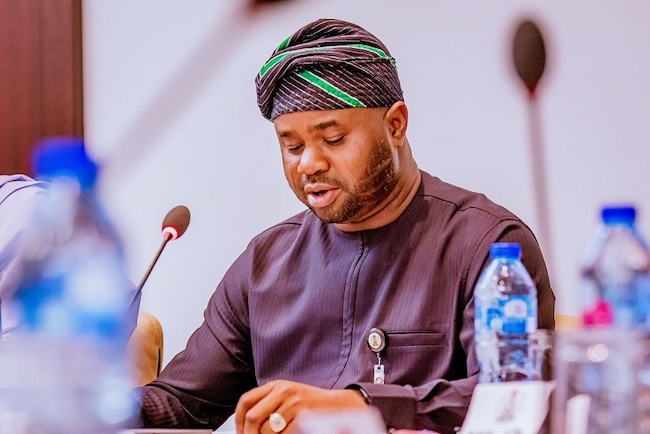
The Executive Chairman of the Federal Inland Revenue Service, Zacch Adedeji, on Tuesday said the Federal Government will continue borrowing despite a sharp rise in revenue collection. He argued that borrowing should not be seen as a weakness but as a deliberate part of Nigeria’s broader economic strategy.
Adedeji disclosed that federal revenue surged to N3.64 trillion in September 2025, a 411 percent increase from N711 billion in May 2023. Speaking with State House Correspondents during the Presidential Communications Team’s Meet-the-Press session at the Aso Villa, Abuja, he said, “Borrowing is not a problem…is borrowing not part of the budget we submitted to the National Assembly. Was it not approved? Are we borrowing aside what was approved?”
His remarks come two months after President Bola Tinubu sought $21.5 billion in external loans, including a $2 billion foreign currency bond and a N757.98 billion bond to offset pension liabilities under the Contributory Pension Scheme. Earlier this month, Tinubu had also declared that Nigeria had met its 2025 revenue targets ahead of schedule and would no longer rely on borrowing to fund the budget, sparking criticism over what some describe as mixed signals.
Adedeji defended the government’s stance, insisting that borrowing is central to Nigeria’s financial ecosystem. He explained that loans are not used to pay salaries but to fund long-term investments, stressing that failure to borrow when necessary would expose the country to higher costs in the future. “Don’t forget that banks are part of our economic ecosystem. There is no country or individual in the world that survives based on its own income,” he said.
He likened the government’s approach to what he called the “Matchy Concept” in business, where projects that benefit future generations should not be borne entirely by the present. According to him, building infrastructure such as roads through borrowing ensures that future users contribute to repayment through taxes, distributing the cost more fairly over time.
Dismissing critics as “container economists,” Adedeji said many rely on social media chatter rather than the fundamentals of fiscal planning. He maintained that borrowing remains a critical pillar of sustainable growth for both countries and businesses.
The FIRS boss highlighted that non-oil revenue had grown substantially, with collections reaching N1.06 trillion compared to N151 billion two years ago. Oil revenue rose to N644 billion, while VAT receipts climbed more than threefold to N723 billion. He attributed the gains to tax reforms aimed at easing burdens on small businesses, streamlining incentives, and tightening compliance through initiatives such as excise rules and e-invoicing.
Looking ahead, Adedeji said the government plans to harmonise subnational levies, introduce a presumptive regime for hard-to-tax groups, and cut corporate tax rates as part of wider fiscal and constitutional reforms.
