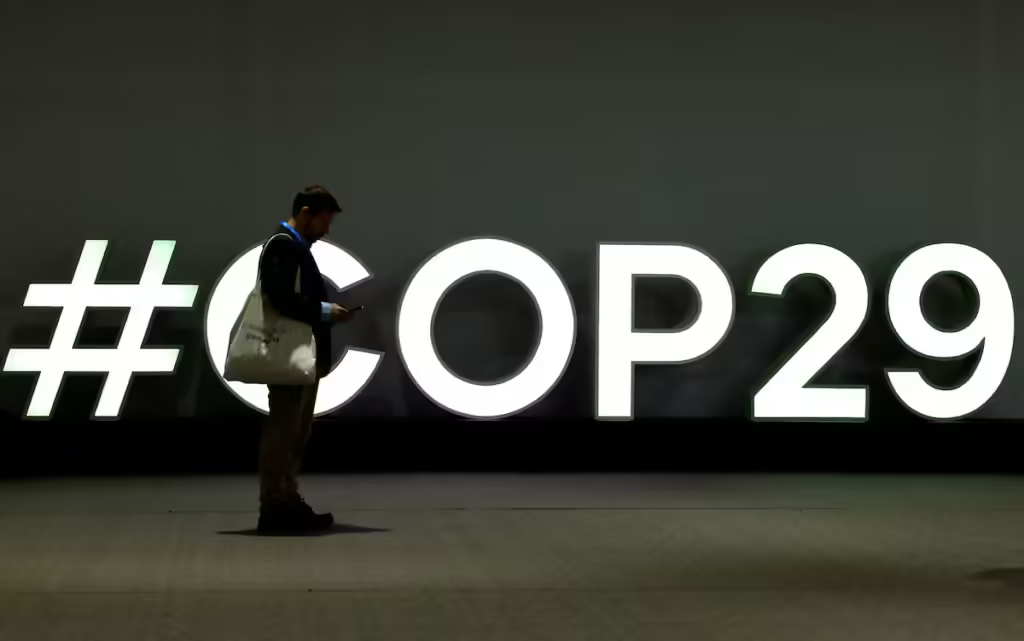
As COP29 climate negotiations near their crucial deadline, talks have reached a critical juncture with growing frustration among negotiators. The focus has now shifted to the “hardest part” of the negotiations—deciding how much money will be provided to developing countries to help them cope with climate-fueled disasters and transition to cleaner energy.
With a notional Friday deadline looming, negotiators are under pressure to agree on the structure, amount, and source of the funding. Azerbaijan’s chief negotiator, Yalchin Rafiyev, warned that the “hardest part begins now,” as a fresh draft text is expected to be presented at midnight (2000 GMT) in Baku, the summit’s host city. The negotiations are currently bogged down, with frustration starting to seep out of the rooms as talks progress slowly.
Australia’s Environment Minister, Chris Bowen, who has been tasked with gathering various views from negotiators, revealed that three funding proposals have emerged: $900 billion, $600 billion, and $440 billion, contrasting sharply with the European Union’s earlier starting point of $100 billion. EU Climate Commissioner Wopke Hoekstra said the bloc would not engage with the figures until more structural details are clarified, warning against a situation where a price is set without understanding what it includes.
In addition to financial contributions, Egypt’s Environment Minister, Yasmine Fouad, stressed that richer developing nations should not be treated the same as wealthier nations when it comes to their financial contributions. This has become a “red line” for countries like Brazil, as highlighted by Brazil’s National Secretary for Climate Change, Ana Toni.
Amid the contentious discussions, Rafiyev emphasized the need for more streamlined texts in the final draft to ensure focused and productive discussions in the coming days. The goal is to reach a conclusion that satisfies all parties as the clock ticks down on COP29.
While financial negotiations have been slow, discussions on accelerating efforts to cut climate-damaging emissions are proving equally challenging. Despite last year’s landmark deal in Dubai to transition away from fossil fuels, countries at COP29 have struggled to agree on language to take that work forward. OPEC Secretary-General Haitham Al Ghais sparked further controversy by calling crude oil and natural gas a “gift from God,” echoing Azerbaijan President Ilham Aliyev’s defense of the industry.
The urgency of these discussions is underscored by growing concerns from scientists about the feasibility of limiting global warming to 1.5 degrees Celsius. French climatologist Robert Vautrad, co-chair of the IPCC’s Working Group 1, warned that current trends could lead to crossing the 1.5-degree threshold as early as the early 2030s unless urgent action is taken.
With little time remaining before the summit’s conclusion, negotiators face mounting pressure to reach a deal that addresses both financial support for developing nations and stronger commitments on emission reductions.
