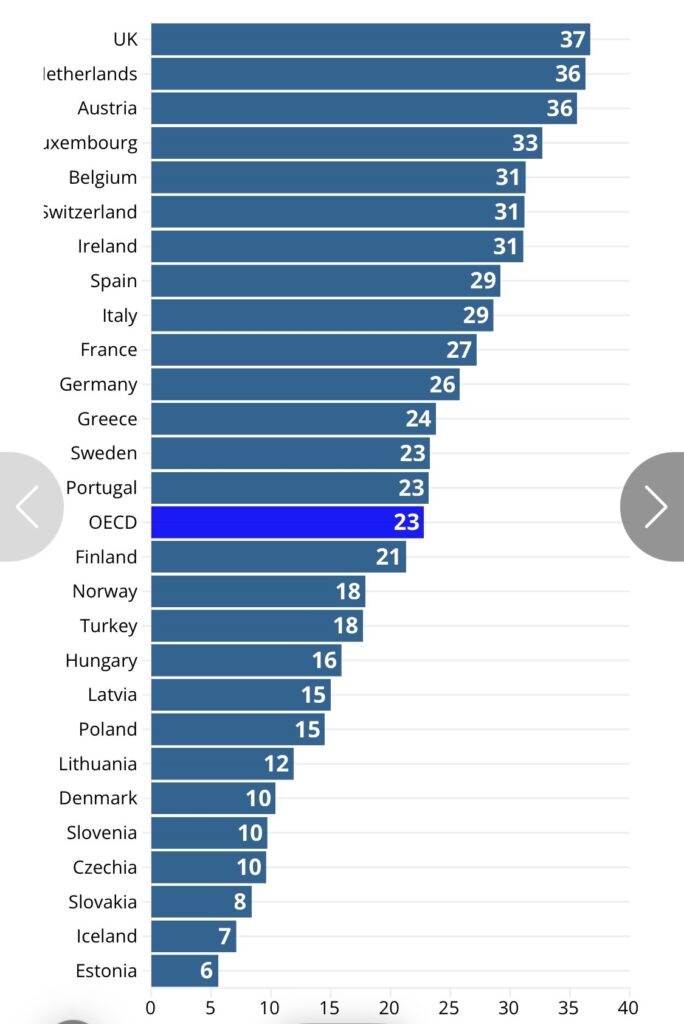
The gender pension gap across Europe is significantly wider than the gender pay gap, exceeding 30% in several countries, according to data from Eurostat and the Organisation for Economic Co-operation and Development (OECD).
While the gender pay gap is a well-documented issue, its scale is smaller by comparison. In 2023, women in the European Union earned 12% less than men, meaning women earned an average of €88 for every €100 earned by men, Eurostat figures show.
The disparity becomes more pronounced in retirement. Across 27 European countries, including some non-EU members, women receive substantially lower pension income than men. On average, women’s pensions are 22% lower, according to the OECD — translating to €78 for women compared to €100 for men.
In major European economies, the gap is even wider. In 2024, the gender pension gap ranged from about 6% in Estonia to 37% in the United Kingdom. The OECD average stands at 23%, closely aligned with the European average of 22% among the countries surveyed.
Countries where the pension gap exceeds 30% include the UK, the Netherlands, Austria, Luxembourg, Belgium, Switzerland, and Ireland.
By contrast, the smallest gaps — 10% or below — are found in Estonia, Iceland, Slovakia, Czechia, Slovenia, and Denmark, highlighting significant regional differences in how lifetime earnings, employment patterns, and pension systems affect women’s financial security in retirement.
Experts note that factors such as career breaks for caregiving, part-time work, lower lifetime earnings, and pension system design continue to drive the disparity, making the gender pension gap one of Europe’s most persistent economic inequalities.
