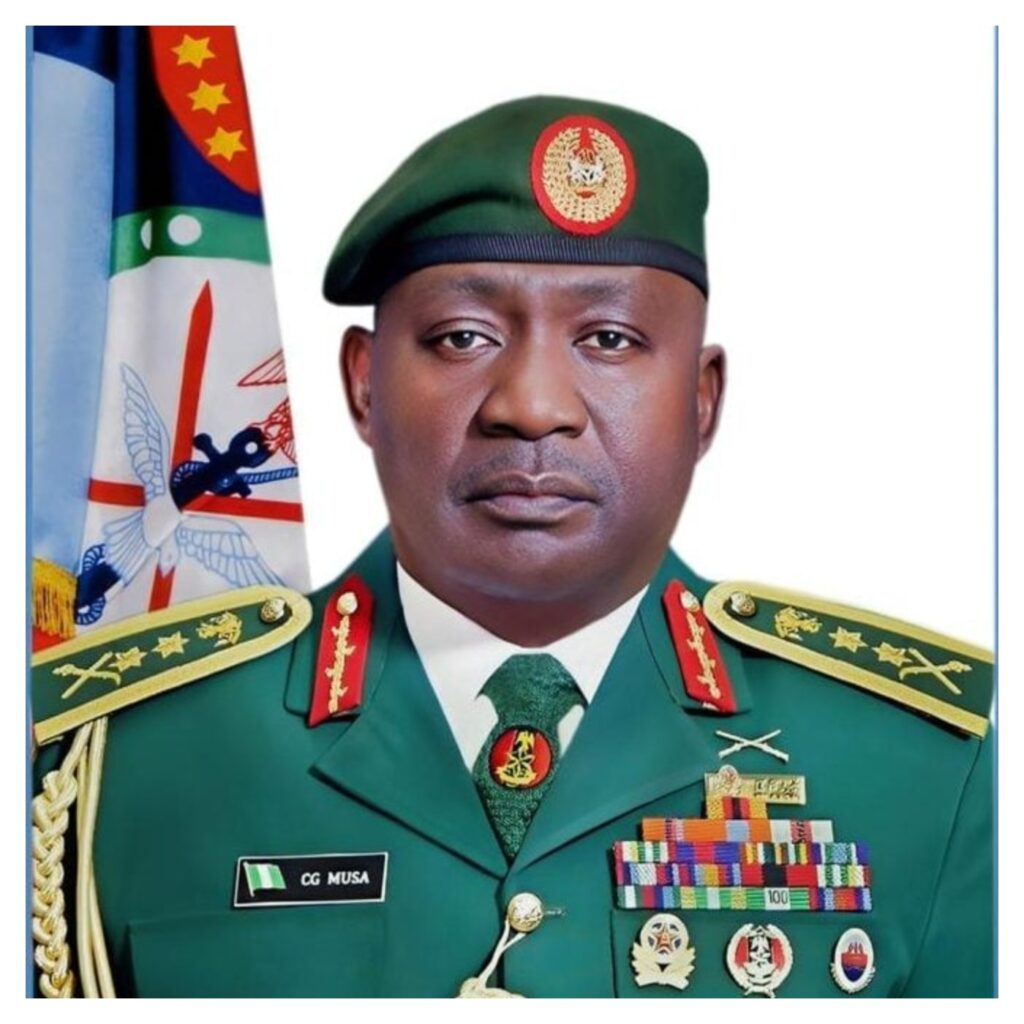
President Bola Tinubu’s appointment of Lieutenant General Christopher Gwabin Musa as Nigeria’s first serving Chief of Defence Staff to transition directly into the substantive Minister of Defence has been greeted with cautious optimism. The move, announced during a minor cabinet reshuffle, breaks decades of tradition where the Defence portfolio was either held by civilians or retired military officers. Supporters argue that placing an active four-star general at the helm signals an unprecedented political will to confront Nigeria’s escalating security crises head-on, while critics fear it further blurs the line between military command and civilian oversight in a democracy still healing from years of military rule.
Gen. Musa brings an imposing résumé to the table. As CDS since June 2023, he has coordinated Operation Hadin Kai in the North-East, overseen the intensified air and ground assaults against ISWAP and Boko Haram remnants, and pushed for better inter-service synergy. Insiders credit him with reducing high-profile attacks in Borno and Adamawa in the last 18 months. His outspoken advocacy for improved funding, troop welfare, and local arms production earned him respect among the rank and file, even as he courted controversy by publicly disagreeing with state governors over amnesty for repentant terrorists. The big question now: can the operational mindset that worked inside the military hierarchy translate into the political horse-trading required at the ministerial level?
The new minister inherits a security landscape that remains grim despite pockets of progress. Over 600 Nigerians were killed in terror-related incidents in the first quarter of 2025 alone, banditry in the North-West has displaced entire local government areas, and oil infrastructure in the Niger Delta is again under sustained militant sabotage. Coordinating 36 state governors, many of whom run parallel security outfits and voter-backed “state police” agendas, will test Gen. Musa’s diplomatic skills more than any battlefield ever did. Sources within the Villa whisper that the President handed him an “emergency mandate” with three non-negotiable targets: visibly degrade bandit leadership within six months, restore safe road travel on at least five critical highways before the 2027 campaign season, and halt the recruitment surge feeding new jihadist splinter groups.
Early signals are mixed but intriguing. Within 72 hours of swearing-in, Gen. Musa convened a closed-door session with the National Security Adviser, service chiefs, and select governors; leaks suggest a new “surge and hold” template modelled on 2009 successes against Niger Delta militancy. Yet the real litmus test will be funding and legislative buy-in for his reported plan to raise a 100,000-strong community defence corps under federal command; a proposal already raising eyebrows in the National Assembly. For a man who once told journalists “we don’t need declarations of emergency, we need results,” the next six months will determine whether the uniform still fits in the corridors of power, or whether Nigeria’s complexities will force even Christopher Musa to learn the hard way that some wars are not won with rank and firepower alone.