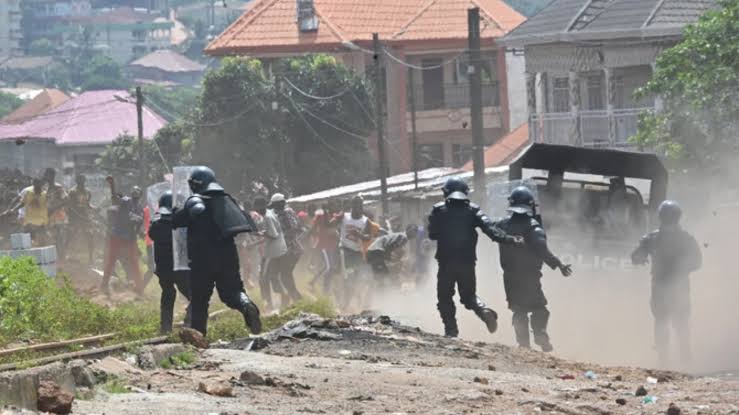
Gunfire erupted Wednesday evening near Chad’s presidential palace in the capital, N’Djamena, with tanks and a heavy security presence visible on the streets, according to AFP reporters on the scene.
A security source indicated that armed men had breached the presidential compound, though authorities have not yet issued an official statement. Roads leading to the presidency were cordoned off, with tanks deployed across the city, while armed police maintained a heavy presence at key locations. Civilians were seen fleeing the area in cars and on motorcycles.
The violence comes less than two weeks after Chad held a contested general election, touted by the government as a step towards ending military rule. However, the election was marred by low voter turnout and allegations of fraud by opposition groups.
The unrest adds to Chad’s existing challenges, including recurrent attacks by the jihadist group Boko Haram in the Lake Chad region, the termination of its military accord with France, and accusations of interference in the ongoing conflict in neighboring Sudan.
Earlier on Wednesday, Chinese Foreign Minister Wang Yi met with President Mahamat Idriss Déby Itno and other senior officials, underscoring Chad’s efforts to deepen its diplomatic ties.
Chad recently ended its defense and security agreements with France, deeming them “obsolete.” French forces, numbering around 1,000, are now withdrawing, marking another shift in France’s military presence in Africa after being expelled from Mali, Burkina Faso, and Niger by governments hostile to Paris. Senegal and Ivory Coast have also requested the removal of French bases.
President Déby came to power in 2021 following the death of his father, Idriss Déby, who ruled Chad for three decades. His government has faced accusations of autocracy and repression. Despite being an oil-producing nation, Chad remains ranked near the bottom of the United Nations Human Development Index.
To consolidate power, Déby has reshuffled the military, traditionally dominated by the Zaghawa and Gorane ethnic groups, to bolster his influence. Diplomatically, he has sought to diversify alliances, forging ties with nations like Russia and Hungary.