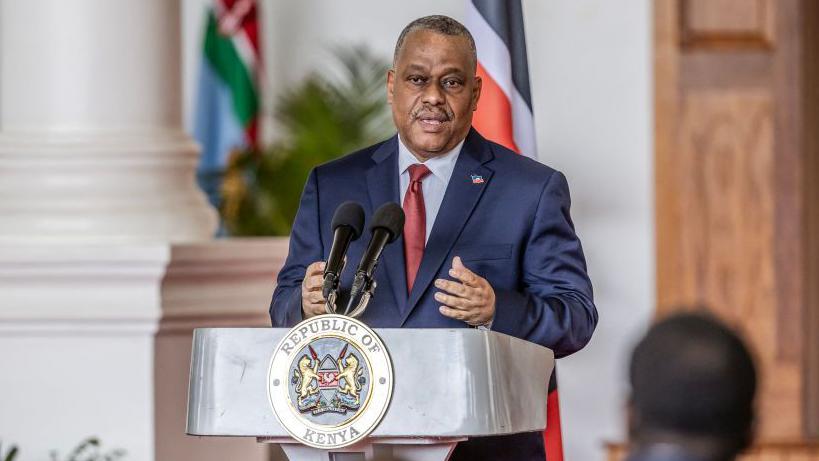
Haitian Prime Minister Garry Conille has been dismissed by the country’s ruling council, less than six months after taking office. An executive order, signed by eight of the council’s nine members, appointed businessman and former Haitian Senate candidate Alix Didier Fils-Aime as Conille’s successor.
Conille, a former United Nations official, was brought in to lead Haiti through a severe security crisis marked by gang violence, with hopes that he would help restore order and oversee the country’s first presidential elections since 2016.
In response to his ousting, Conille called the decision illegal and expressed grave concerns about Haiti’s future. In a letter seen by Reuters, Conille argued that his removal was unconstitutional, stating that Haiti’s constitution gives the power to dismiss a sitting prime minister only to the parliament, which the country currently lacks.
“This resolution, taken outside any legal and constitutional framework, raises serious concerns about its legitimacy,” Conille wrote in his letter.
Haiti has been in political turmoil since the assassination of President Jovenel Moïse in July 2021. The country has been without a president and has not held elections in nearly eight years. Following Moïse’s death, a transitional presidential council (TPC) was established in April to restore order and facilitate a return to democratic governance. The TPC’s creation followed the ouster of Conille’s predecessor, Ariel Henry, by gangs that had seized control of parts of the capital, Port-au-Prince.
Since then, gang violence has intensified. More than 3,600 people have been killed in Haiti since January, and over 500,000 have been displaced, according to the UN. The country, one of the poorest in the world, is also facing severe hunger, with two million people experiencing emergency levels of food insecurity.
Amid the ongoing crisis, prominent gang leader Jimmy Chérizier, also known as Barbecue, has said he would consider ending the violence if armed groups were allowed to participate in talks to form a new government.
With presidential elections last held in 2016, Haiti has been in a prolonged state of political instability. The country’s power vacuum has allowed gangs to expand their control over large portions of the nation, with lawlessness becoming rampant in some areas.
In an effort to stabilize the country, hundreds of Kenyan police officers were recently deployed to Haiti, with additional forces expected to arrive in November.