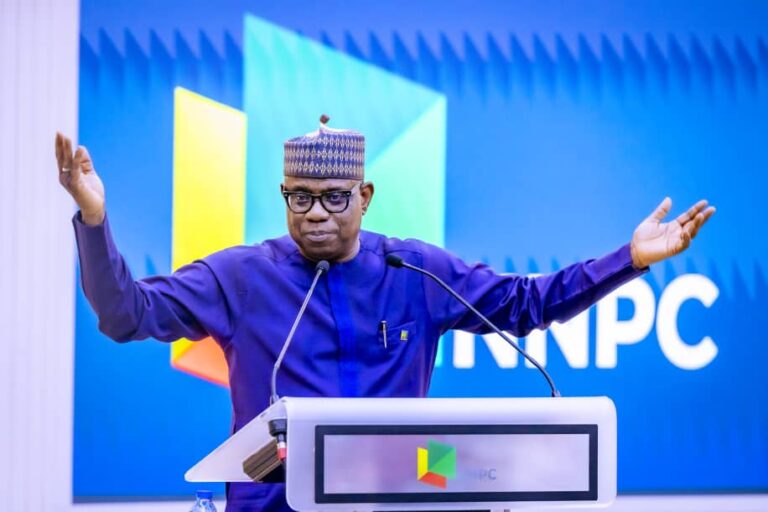
The Group Chief Executive Officer of the Nigerian National Petroleum Company Limited (NNPC), Bayo Ojulari, has attributed Nigeria’s unusually high oil production costs to significant investments in securing crude oil pipelines in the Niger Delta. Speaking to Bloomberg at the 9th OPEC International Seminar in Vienna, Ojulari revealed that Nigeria’s production cost had risen to between $25 and $30 per barrel—more than double the global average and three times that of Saudi Arabia. He said the surge was largely due to operational expenses, particularly those related to pipeline security, which now accounts for a major share of production costs.
Ojulari explained that the Nigerian government overhauled its approach to oil infrastructure protection, replacing traditional policing with a community-based surveillance model. According to him, this shift has delivered better results and enhanced sustainability. “Security is now being driven by the communities themselves,” he said, noting that the collaboration between government security forces and local groups had not only improved pipeline availability but also created livelihoods in oil-producing regions.
Addressing concerns over crude supply to the privately owned Dangote Refinery, Ojulari clarified that the facility would operate on a fully commercial basis. He emphasized that no government policy would compel the refinery to buy local crude, and supply arrangements would be determined through market-based negotiations. “We’re moving away from government domination in private sector businesses,” he said, stressing the administration’s commitment to allowing market forces to guide transactions.
Looking ahead, Ojulari said Nigeria aims to increase crude oil output to 2.06 million barrels per day by 2027, up from the current 1.63 million, including condensates. He also disclosed plans to ramp up gas production from 7 billion to 10 billion cubic feet within the same timeframe. On the state-owned refineries, he admitted that ongoing revamp efforts had faced technical setbacks, prompting a strategic review. While he didn’t rule out the possibility of selling the refineries, Ojulari insisted that all options were under consideration. He also called for increased global energy equity, urging greater investments in Africa to bridge the continent’s energy access gap.
