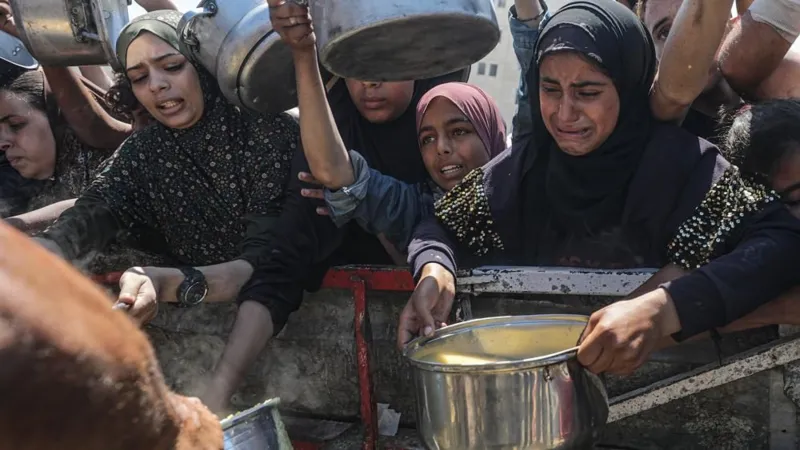
More than 100 humanitarian organisations, including Oxfam and Médecins Sans Frontières (MSF), have signed a joint letter demanding that Israel end what they call the “weaponisation of aid” into Gaza, warning that “starvation deepens” amid tightening restrictions.
The signatories say aid groups are increasingly denied permission to deliver relief unless they comply with stricter Israeli regulations introduced in March. Under the rules, organisations risk losing access if they “delegitimise” Israel or refuse to provide detailed information about Palestinian staff.
Israel denies placing restrictions on humanitarian aid, insisting the measures are intended to ensure relief “reaches the population directly and not Hamas.”
According to the letter, most major international NGOs have been unable to deliver a single truckload of lifesaving supplies since March 2. Aid groups report that Israeli authorities rejected requests from dozens of NGOs, blocking more than 60 shipments in July alone.
The result, they warn, has been catastrophic: “Hospitals without basic supplies, children, people with disabilities, and older people dying from hunger and preventable illnesses.”
Sean Carroll, CEO of American Near East Refugee Aid (Anera), said: “Anera has over $7 million worth of lifesaving supplies ready to enter Gaza – including 744 tons of rice, enough for six million meals, blocked in Ashdod just kilometers away.”
Israel: Delays Are Due to Non-Compliance
Israel maintains that delays occur “only when organisations choose not to meet the basic security requirements intended to prevent Hamas’s involvement.” Cogat, the Israeli military body overseeing aid, says nearly 20 organisations that completed the registration process are currently delivering relief, with around 300 trucks entering Gaza daily.
The United Nations says that number falls far short of the 600 trucks a day needed to avert famine.
The March guidelines update Israel’s framework for NGO registration and outline grounds for denial, including rejecting applications from groups deemed to “deny the democratic character of Israel” or promote “delegitimisation campaigns.”
“Unfortunately, many aid organisations serve as a cover for hostile and sometimes violent activity,” Israel’s Diaspora Minister Amichai Chikli told AFP. “Organisations that have no connection to hostile or violent activity and no ties to the boycott movement will be granted permission to operate.”
Bushra Khalidi, Oxfam Policy Lead, countered that Israel has blocked more than $2.5 million worth of goods, warning that the new rules signal to INGOs that “their ability to operate may come at the cost of their independence and ability to speak out.”
Mounting Hunger Amid Intensified Bombardment
The warning comes as Israel escalates its bombardment of Gaza City ahead of a planned takeover. Israel says humanitarian aid will be provided to civilians “outside the combat zones,” but has not confirmed whether deliveries would be channelled through the Israel- and US-backed Gaza Humanitarian Foundation (GHF).
Human rights groups say the system has become a “militarised food distribution scheme” that risks exacerbating the humanitarian crisis. “The militarised food distribution scheme has weaponised starvation,” said Aitor Zabalgogeazkoa, MSF emergency coordinator in Gaza.
Chris Lockyear, secretary-general of MSF, called the GHF a “death trap,” warning that Gaza’s humanitarian situation is “hanging on by a thread.”
According to the Hamas-run health ministry, Israel’s offensive has killed nearly 62,000 Palestinians since Hamas’s October 2023 attack, which killed about 1,200 people in Israel and saw 251 taken hostage. The ministry says at least 235 people, including 106 children, have died from starvation and malnutrition.
Israel insists the aid controls are essential to prevent Hamas from diverting supplies—an accusation Hamas denies.
