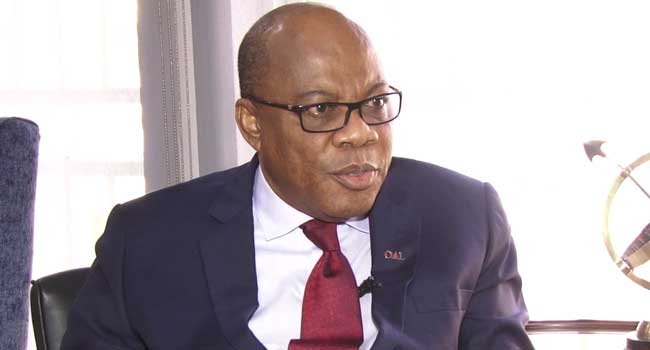
Olisa Agbakoba, human rights lawyer and Senior Advocate of Nigeria, has openly criticised the controversial bill proposing compulsory voting in Nigeria, stating that he would rather face imprisonment than comply with such legislation.
Speaking on Channels Television’s Politics Today programme, Agbakoba condemned the National Assembly’s move to mandate voting for all eligible Nigerians, arguing that the legislation fails to tackle the underlying causes of voter apathy in the country.
“Look at the ridiculous one in the National Assembly about voting being compulsory. If that bill were to pass, I would say, ‘Agbakoba, we will not obey it.’ I’ll plead conscientious objection. I’d rather go to prison for six months than to obey it,” he asserted.
Agbakoba questioned the logic behind the bill, urging lawmakers to reflect on the reasons why Nigerians remain disengaged from the electoral process. “Why would the National Assembly want to impose compulsory voting? Why don’t they reverse the question and say, Why are Nigerians not interested? What is the apathy about?” he asked.
Exclusion and Unfulfilled Promises Fuel Apathy
The senior lawyer attributed voter disengagement to years of exclusion and unmet political promises rather than a lack of civic duty. “The apathy is that they don’t get anything. If I know that I’m going to get something—there’s an aspiration, there’s an interest—you will find people coming out to vote. But then people see the same old trick. You come, you take my vote, you disappear till the next four years. There’ll be apathy,” Agbakoba explained.
He identified exclusion as the core issue plaguing Nigeria’s democracy. “Right now, we have a big problem with having a system that excludes. I think you will find the biggest problem we have in Nigeria is around exclusion. That, I think, is the biggest problem—around exclusion. People are not taking part in the process.”
Looking ahead to the 2027 general elections, Agbakoba warned that democracy cannot thrive if it continues to serve only a privileged few. “Suddenly, you have a big issue of coalitions and defections. Why? I have not heard many politicians talk about people—about the welfare of Nigerians, about their suffering, about their inadequate opportunities. I have not heard that.
“All I hear politicians do is, every four years, they jump up; they become active. Once they get power, they disappear. So for all these reasons, I think we need to look for a new model,” he said.
Pressed on whether the problem lies in the allure of public office and leadership failure, Agbakoba reiterated that Nigeria’s political shortcomings underpin voter disinterest. “We’ve had some good leaders, I must confess. But generally speaking, the leadership quality has been very poor. And the leadership quality has not led Nigerians to where they want to be.
“That’s why I refer to the fact that we have voter apathy and disinterest. So, unless we ask ourselves and interrogate the issue behind this lack of interest in voting, we will not get it right.
“I can tell you that the reason why Nigerians are not interested is because they don’t see anything. You should take a trip around Nigeria. Lagos is not Nigeria, by the way, because some people who live here, like us, think that,” he emphasised.
Mandatory Voting Bill Faces Strong Opposition
The contentious proposal, titled A Bill for an Act to Amend the Electoral Act, 2002, which passed second reading in the House of Representatives, aims to make voting compulsory for all eligible Nigerians in national and state elections.
Jointly sponsored by Speaker Tajudeen Abbas and Labour Party lawmaker Daniel Asama Ago, the bill’s proponents argue that compulsory voting will reduce voter apathy and curb vote-buying. Ago cited countries like Australia as successful examples of this approach.
Deputy Speaker Benjamin Kalu also endorsed the bill, describing it as “a step in the right direction”.
However, the bill has met with fierce criticism from various quarters. Another Senior Advocate of Nigeria, Femi Falana, labelled the proposal unconstitutional and impractical. In a statement titled ‘Compulsory Voting Is Not Enough’, Falana argued that the law violates constitutional protections of privacy, freedom of thought, and conscience.
He noted, “It is doubtful whether the Speaker and his colleagues have paid sufficient attention to the relevant provisions of the Constitution. Otherwise, they would have realised that compulsory voting is constitutionally invalid in every material particular on the ground that it is inconsistent with Sections 37, 38, 77(2), 135(5), and 178(5) of the Constitution.”
Falana warned that enforcing compulsory voting would be impossible in practice. “Compulsory voting cannot be legalised in vacuo… It is practically impossible to prosecute millions of Nigerians who may decide to boycott national and local elections that have been reduced to the periodic renewal of misgovernance, corruption, and abuse of power,” he stated.
