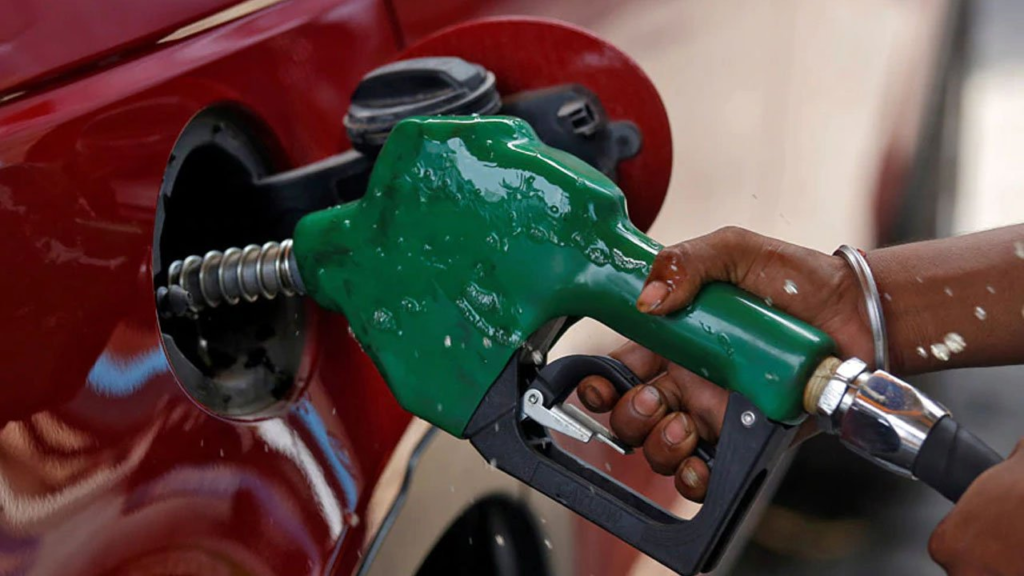
The National Bureau of Statistics (NBS) has revealed that Imo, Jigawa, and Sokoto states recorded the highest retail prices for petrol across Nigeria in April 2025. According to the agency’s Premium Motor Spirit (PMS) report, residents in Jigawa paid an average of N1,588.50 per litre, followed closely by Sokoto and Imo states, where prices stood at N1,567.84 and N1,550.00 per litre respectively.
This data marks a shift from March 2025, when Jigawa, Kaduna, and Cross Rivers states topped the list with average retail prices of N1,700, N1,650, and N1,563.86 per litre respectively.
The NBS report further detailed state-level variations, stating: “On State profile analysis, Imo State had the highest average retail price for Premium Motor Spirit (Petrol), at N1,588.50, Jigawa and Sokoto States were next, with N1,567.84, and N1,550.00, respectively.”
Conversely, some states experienced notably lower petrol prices. Yobe, Kwara, and Osun states recorded the lowest average prices at N970.00, N1,014.85, and N1,042.49 per litre respectively.
On a zonal level, the South East Zone experienced the highest average retail petrol price of N1,341.71, while the South West Zone had the lowest, at N1,138.64.
The report also highlighted a slight dip in the national average retail price of petrol, which fell by 0.52 percent month-on-month — from N1,245.80 in March to N1,239.33 in April 2025.
“The average retail price paid by consumers for Premium Motor Spirit (Petrol) for April 2025 was N1,239.33, indicating a 76.73 percent increase compared to the value recorded in April 2024 (N701.24),” the NBS added.
Despite this year-on-year increase, there was a modest decline compared to the previous month: “Likewise, comparing the average price value with the previous month (i.e., March 2025), the average retail price decreased by 1.77 percent from N1,261.65.”
The fluctuations in petrol prices remain a critical concern for Nigerian consumers, impacting transportation costs and the broader economy.
