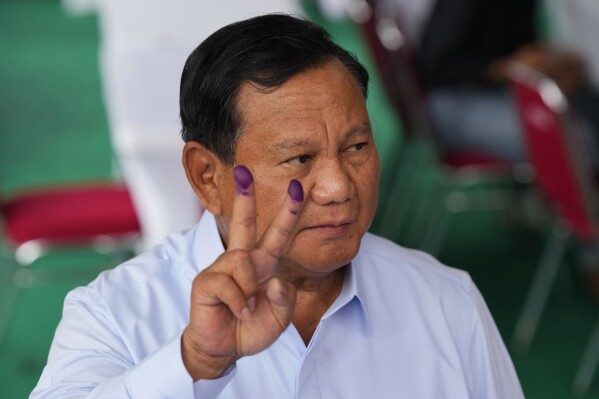
Days after being sworn in as Indonesia’s eighth president, retired general Prabowo Subianto began his tenure with a striking militaristic boot camp in the hills of Java. Dressed in olive-green army fatigues and combat boots, his new cabinet—comprising bespectacled technocrats and former officers—stood in formation, presenting a disciplined image for the world’s third-largest democracy.
However, analysts suggest this display of order contrasts sharply with the reality of Prabowo’s initial 100 days in office. His leadership has been criticized as haphazard, contradictory, and lacking clear direction.
A Rocky Start to Leadership
“This is one of the most chaotic first 100 days I have seen,” said Yohanes Sulaiman of General Achmad Yani University in Bandung. “The government seems to be lacking in discipline, with most of the policies half-baked.”
Prabowo’s landslide election victory in February last year was fueled by a populist promise to provide free meals to nearly 90 million schoolchildren and pregnant women. However, his administration has since faced backlash over a series of policy reversals, including changes to controversial topics such as pardons and Indonesia’s stance on Beijing’s claims in the South China Sea.
Policy Reversals and Criticism
One of the most notable controversies was Prabowo’s apparent acknowledgment of China’s maritime claims in the South China Sea, an issue long disputed by Indonesia and other Southeast Asian nations. Analysts like Kevin O’Rourke called it a deliberate concession, questioning the trade-offs behind such a move. “This was clearly a concession made to the Chinese in exchange for something else,” said O’Rourke.
In response to public and diplomatic pressure, Indonesia’s foreign ministry later issued a statement contradicting Prabowo’s earlier stance, emphasizing that it did not recognize China’s nine-dash line.
Other policy reversals include the abrupt decision to limit a planned VAT hike to luxury goods and services just hours before its implementation. While Prabowo justified the move as an effort to avoid inflationary impacts, analysts argue it created business and investment uncertainty in Southeast Asia’s largest economy.
Mixed Reactions to Populist Programs
Prabowo’s free meals program has been well-received domestically, with a January survey showing an 80.9% approval rating for the initiative. “We have been able to achieve a stable condition, filled with tranquility,” he said during a cabinet meeting on January 22.
However, academics and policy experts remain critical of his broader governance. Lina Alexandra from the Centre for Strategic and International Studies described his foreign policy approach as “scrambling,” citing a lack of direction despite numerous international visits and Indonesia’s recent decision to join BRICS.
Managing a Bloated Coalition
Part of the governance challenges, according to Alexander Arifianto of the Rajaratnam School of International Studies, lies in managing a large and unwieldy coalition. This has led to policy rollouts that are often inconsistent and poorly coordinated.
Other moves, such as releasing foreign prisoners on death row and floating the idea of pardoning corruption convicts, have added to the controversies surrounding his leadership.
Contradictions in Leadership
Prabowo’s campaign highlighted an image of a decisive and disciplined leader, but his actions in office suggest otherwise. “Ultimately, this just reflects Prabowo himself. He’s very changeable and has long been prone to delivering contradictory messages depending on his audience,” said O’Rourke.
As Indonesia’s new president grapples with criticism and governance challenges, one thing remains clear: Prabowo’s first 100 days in office have been anything but smooth, leaving analysts and citizens alike questioning the direction of his leadership.
