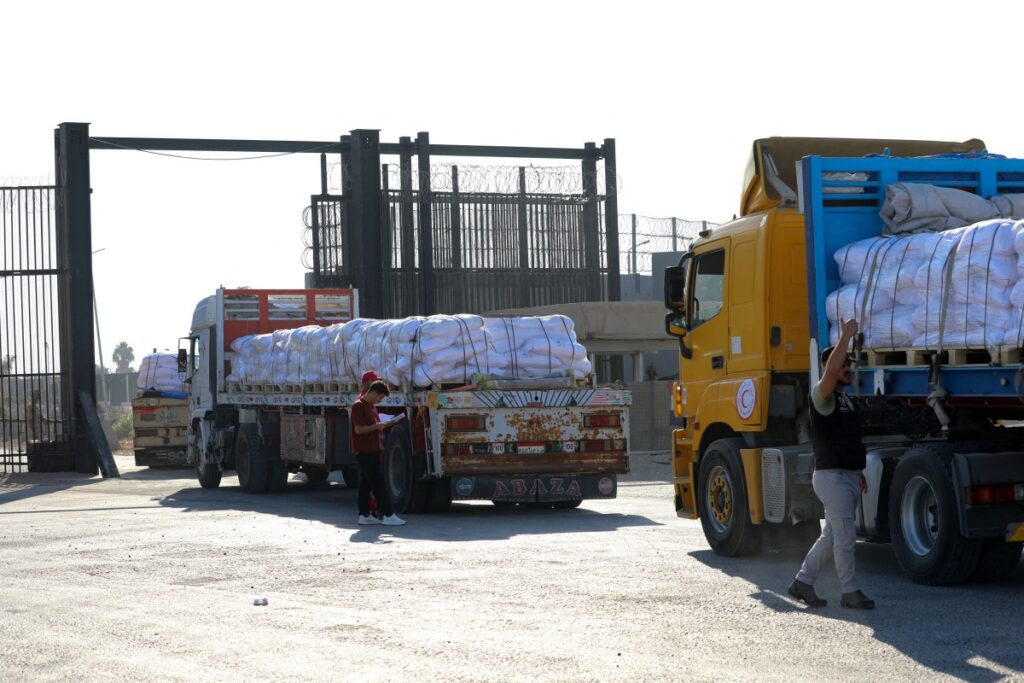
Jordanian and Emirati aircraft dropped food into Gaza on Sunday, as Israel began a limited “tactical pause” in some military operations to allow humanitarian agencies to deliver life-saving aid. The move comes amid worsening famine conditions in the war-torn Palestinian territory, where over 21 months of conflict and a months-long aid blockade have led to severe malnutrition and widespread civilian suffering. The World Health Organization (WHO) warned that 63 out of 74 malnutrition-related deaths recorded in 2025 occurred in July alone, with young children making up a large portion of the victims.
Despite easing its full blockade, Israel has largely sidelined the UN and major aid organizations, instead relying on a controversial US-backed private entity, the Gaza Humanitarian Foundation — a move aid groups claim undermines neutrality and increases danger for civilians. On Sunday, the Israeli military and regional allies dropped limited supplies into Gaza, but humanitarian officials stressed the effort remains insufficient. “Starvation won’t be solved by a few trucks or airdrops,” said Oxfam’s Bushra Khalidi. “What’s needed is a real humanitarian response: ceasefire, full access, all crossings open.”
International pressure is mounting on Israeli Prime Minister Benjamin Netanyahu, with world leaders including Germany’s Chancellor Friedrich Merz demanding immediate action. Netanyahu blamed the UN for spreading “lies” and maintained that secure aid routes are now open. Still, the daily “pause” — from 10 a.m. to 8 p.m. — is limited to areas without active military operations. As civilians continue to die near aid distribution zones, and with over 59,000 Palestinians killed since the conflict began, humanitarian officials are calling for not just pauses, but a permanent ceasefire and full humanitarian access to address Gaza’s spiraling crisis.
