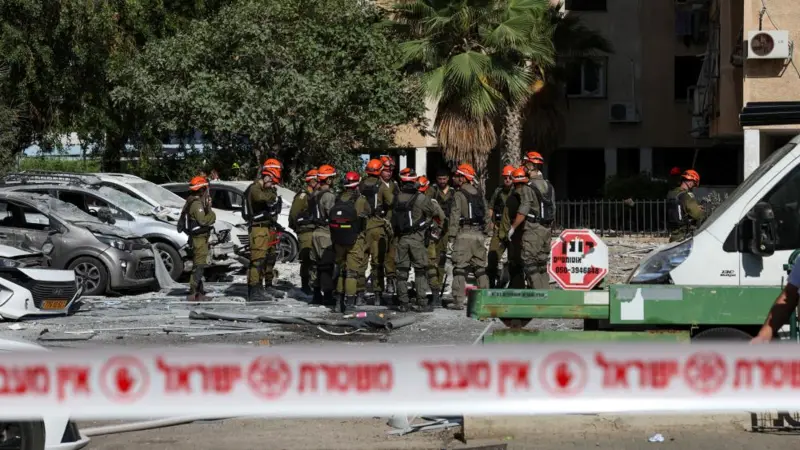
In a dramatic escalation of hostilities between Israel and Iran, an Israeli hospital in the southern city of Beersheba was heavily damaged by a missile strike on the morning of June 19, 2025. The strike, which targeted military infrastructure near the Soroka Medical Center, resulted in the hospital sustaining extensive damage. Over 65 people were reported injured across Israel as the missiles hit multiple civilian areas.
Iranian Strikes Cause Widespread Destruction
The Iranian missile barrage, described as one of the most significant in recent days, targeted several locations across Israel. According to the Israeli emergency services, Magen David Adom, 65 individuals were injured in the attacks. The victims included elderly individuals in critical condition, along with many others suffering from mild injuries caused by shrapnel and explosions. Some injuries occurred as people attempted to seek shelter from the attacks.
In response to the devastation, Israeli President Isaac Herzog condemned the attacks, highlighting the innocent civilians caught in the crossfire. “A baby in intensive care. A mother by their bedside. A doctor rushing between beds. An elderly resident in a nursing home. These were some of the targets of Iran’s missile attacks on Israeli civilians this morning,” Herzog said. “In moments like these, we are reminded of what’s truly at stake, and the values we are defending.”
Targeting of Military Sites
While the Soroka Hospital itself was not the primary target, Iranian state media confirmed that the missile strikes aimed at military facilities near the hospital. The strikes targeted an Israeli Defense Forces (IDF) command and intelligence headquarters located at the Gav-Yam Technology Park, close to the hospital. Iranian reports indicated that the hospital was exposed to the blast wave but suffered no direct hits.
The hospital, which serves as a major medical center for Israel’s Negev region, continues to operate despite the damages, though authorities have urged people to stay away due to concerns over hazardous materials that may have leaked following the attack.
Israeli Military Retaliates
As the conflict intensifies, Israel’s military confirmed retaliatory strikes on Iranian targets. The Israeli Defense Forces (IDF) reported that it had attacked key Iranian nuclear sites, including the “inactive” Arak heavy water reactor, which is believed to be designed for plutonium production. Additionally, Israeli air forces carried out attacks on a site in Natanz, where Iran’s nuclear weapons development activities are ongoing. The IDF maintains that these strikes are aimed at preventing Iran from advancing its nuclear weapons program.
Israeli Prime Minister Benjamin Netanyahu vowed a strong response, stating, “This morning, Iran’s terrorist tyrants launched missiles at Soroka Hospital in Beersheba and at a civilian population in the center of the country. We will exact the full price from the tyrants in Tehran.”
Global Reactions and Escalating Tensions
The missile strikes follow a tense period marked by mounting geopolitical pressure. U.S. President Donald Trump has reportedly approved plans to attack Iran but has not yet made a final decision on whether to proceed with military intervention. Iran’s Supreme Leader has warned of “irreparable harm” should the U.S. join Israel in striking Iran, escalating the stakes of an already volatile situation.
As the situation unfolds, analysts fear that further escalation could lead to more devastating consequences, with significant ramifications for regional stability and global peace.
