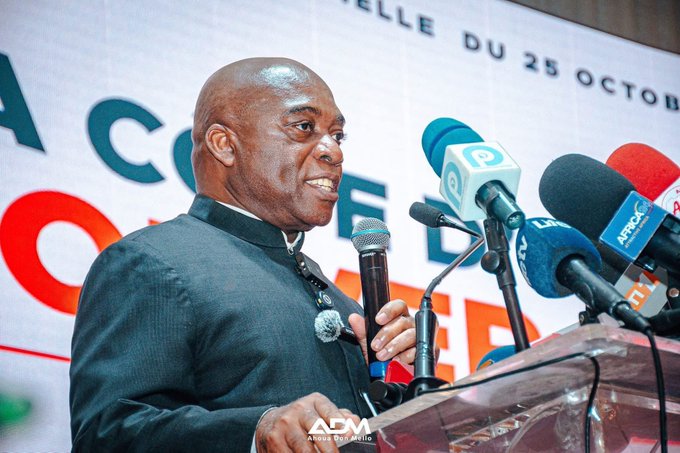
With just weeks to the October 25 presidential election, Ivory Coast’s political landscape is heating up as three familiar figures emerge to challenge President Alassane Ouattara’s bid for a controversial fourth term. The West African nation — the world’s top cocoa producer — now faces another high-stakes test of its fragile democracy.
Simone Gbagbo: The Comeback of a Controversial First Lady
At 76, Simone Gbagbo is no stranger to Ivorian politics or its turbulence. Once the nation’s First Lady and a central figure during her husband Laurent Gbagbo’s presidency, she returns to the political stage after years marked by imprisonment and international scrutiny. Following the 2010-2011 post-election crisis that claimed around 3,000 lives, she was sentenced to 20 years in prison for crimes against the state — a conviction that symbolized the deep divisions of that era. Today, Gbagbo seeks to reinvent herself as a symbol of resilience and national reconciliation.
Don Mello: The Rebel Within Gbagbo’s Legacy
Don Mello, 67, a former spokesperson for Laurent Gbagbo during the 2010-2011 conflict, is contesting the election as an independent after being expelled from Gbagbo’s party, the African People’s Party of Ivory Coast (PPA-CI). His decision underscores growing rifts within the opposition camp. Mello insists that participation — not boycott — is key to democratic legitimacy, referencing the opposition’s 2020 withdrawal that saw Ouattara win with 94% of the vote.
He has also called for bold economic and diplomatic reforms, including abandoning the CFA franc and reassessing Ivory Coast’s defense pacts with France. While critics accuse him of leaning toward Moscow, Mello has dismissed claims of being “Putin’s man,” describing his campaign as one rooted in “African sovereignty.”
Henriette Lagou Adjoua: The Centrist Voice for Peace and Inclusion
Rounding out the opposition field is 66-year-old Henriette Lagou Adjoua — a former minister and social advocate known for her centrist ideals. Representing the Group of Political Partners for Peace, Adjoua has positioned herself as a unifier, championing dialogue and reconciliation. “The wounds of the past have not disappeared,” she said at a recent campaign event, urging Ivorians to “choose peace over polarization.”
Adjoua, who also ran in 2015, is a vocal advocate for women in politics and author of “Why Not a Woman?”, a rallying call for female leadership in a male-dominated political scene.
As the campaign intensifies, Ivorians watch closely — torn between continuity and change. Whether the opposition’s fragmented front can mount a credible challenge to Ouattara’s entrenched power remains to be seen, but one thing is clear: the October 25 election will test both the nation’s political maturity and its appetite for reform.
